Key takeaways
- The best wrecking bars compared on length, steel and end shape, with five forged picks from 30 to 42 inches for demolition, prying and nail pulling.
A wrecking bar earns its place in a demolition kit by turning your body weight into prying force, and the best wrecking bars do it with a one-piece forged body, a gooseneck claw that bites under nail heads, and enough length to multiply every pull. For most tear-out work, that formula points to a 36 inch gooseneck bar, and the Estwing Gooseneck Wrecking Bar PRO (EWB-36PS) leads this guide because it pairs that classic shape with one-piece forged steel made in the USA. If shock and vibration wear you down during long sessions, the 30 inch Fiskars Pro IsoCore adds a shock control handle, and if reach matters most, the 42 inch IRWIN bar delivers the longest lever in this group.
This guide covers full-size wrecking and demolition bars of 24 inches and up only. Smaller flat bars, cat’s paws and handled pry bars belong to a different family, and they are covered in the companion pry bar guide on this site. Every bar below was compared on published specifications only: overall length, steel type and construction, end shapes, weight where the maker publishes it, and grip or finish design. The five picks span budget, mid-range and premium tiers, so the right choice comes down to the work in front of you rather than the badge on the bar.
As an Amazon Associate, we earn from qualifying purchases.
Table of Contents
- The 5 Best Wrecking Bars
- 1. Estwing Gooseneck Wrecking Bar PRO, 36 Inch
- 2. Fiskars Pro IsoCore Wrecking Bar, 30 Inch
- 3. IRWIN Wrecking Bar, 42 Inch
- 4. Estwing Gooseneck Wrecking Bar, 36 Inch
- 5. Estwing Demolition Crowbar, 36 Inch
- How to Choose a Wrecking Bar
- Frequently Asked Questions
- Conclusion
- Product and ASIN Reference
The 5 Best Wrecking Bars
| Product | Length | Weight | Tier |
|---|---|---|---|
| Estwing Gooseneck Wrecking Bar PRO (EWB-36PS) | 36 in | Not published | Premium |
| Fiskars Pro IsoCore Wrecking Bar (751410-1001) | 30 in | 5.8 lb | Premium |
| IRWIN Wrecking Bar (IRHT55010) | 42 in | 7.6 lb | Mid-range |
| Estwing Gooseneck Wrecking Bar (EWB-36) | 36 in | Not published | Mid-range |
| Estwing Demolition Crowbar (42501) | 36 in | Not published | Budget |
1. Estwing Gooseneck Wrecking Bar PRO, 36 Inch (EWB-36PS)

Best for: Heavy demolition and framing tear-out | Tier: Premium
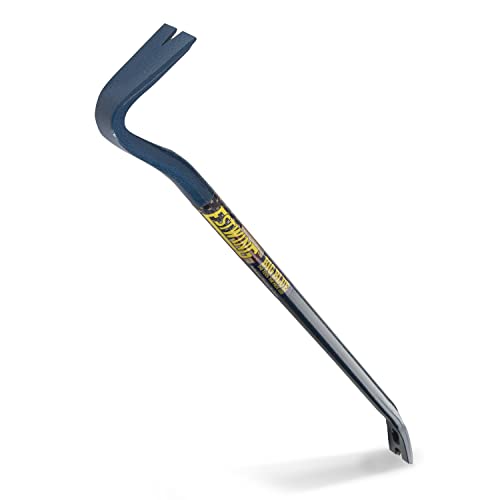
The EWB-36PS is the bar this guide recommends first because it follows the proven gooseneck formula with no weak link in the chain. Estwing forges the bar in one piece, so there is no weld, joint or handle socket to loosen when you lean your full weight onto the claw. The gooseneck curve rolls over the workpiece as you pull, which keeps the claw seated under nail heads and board edges through the whole stroke instead of popping free halfway through the lift.
One end carries an angled chisel for prying and lifting, ground so it slides under deck boards, subfloor sheets and nailed framing members. The other end is a slotted hook shaped for pulling nails and spikes, and the high-leverage geometry means a 36 inch shaft does the work that would otherwise call for a much heavier bar. The PRO model comes from Estwing’s line of tools made in Rockford, Illinois, and it suits crews and serious renovators who reach for the same bar every day. Choose a shorter bar only if most of your work happens inside cabinets, closets or other tight framing bays where a 36 inch swing will not fit.
Specs
- Length: 36 in
- Model: EWB-36PS
- Construction: Forged steel, one piece
- Ends: Angled chisel end and slotted hook end
- Profile: Gooseneck, high-leverage design
- Origin: Made in the USA
2. Fiskars Pro IsoCore Wrecking Bar, 30 Inch (751410-1001)

Best for: Long demolition sessions where shock and vibration add up | Tier: Premium
Most wrecking bars are a single piece of steel with nothing between the impact and your hands. The Fiskars Pro IsoCore takes a different approach: its handle carries the maker’s IsoCore shock control system, which Fiskars describes as transferring far less shock and vibration to the user than a plain wood handle. For a full day of pulling subfloor or stripping a deck, that cushioning is the difference between a tool you keep swinging and one you keep putting down.
The business end is forged steel with a wedged demolition edge for prying and chiseling, plus a board bender and straightener that lets you flatten bent boards so they can be reused instead of discarded. The listing also describes striking and struck faces, so the bar can be driven into a tight joint with a hammer and can deliver blows of its own. At 30 inches it gives up some leverage to the 36 inch bars here, but it is easier to place in stud bays and stair openings, and the textured soft grip keeps control when gloves are dusty. Fiskars backs the bar with a full lifetime warranty, per the maker listing.
Specs
- Length: 30 in
- Weight: 5.8 lb
- Model: 751410-1001
- Construction: Forged steel
- Handle: Textured soft grip with IsoCore shock control system
- Ends: Wedged demolition edge, board bender and straightener, striking face
- Warranty: Full lifetime warranty, per the maker listing
3. IRWIN Wrecking Bar, 42 Inch (IRHT55010)

Best for: Maximum reach and leverage on joists, beams and formwork | Tier: Mid-range
Length is leverage, and at 42 inches the IRWIN IRHT55010 is the longest bar in this guide. That extra half foot over a 36 inch bar shows up when you are lifting floor joists, shifting beams, walking concrete forms loose or bending and pulling heavy material that a shorter bar can only nudge. The trade-off is weight and swing room: at 7.6 lb it is the heaviest pick here, and it needs open space to work, which makes it a poor fit for bathroom gut jobs and other small rooms.
Instead of the usual gooseneck claw, this bar ends in a 90-degree rounded end. The rounded profile rolls against the surface under the bar as you pry, which helps when you need to work in tighter spots than a long bar usually allows, and IRWIN positions the tool for bending and pulling heavy materials as much as for pulling nails. The body is heavy duty steel with a simple, no-frills finish. If your demolition list leans toward structural work outdoors or in open framing, this is the bar that turns two-person lifts into one-person prying jobs.
Specs
- Length: 42 in
- Weight: 7.6 lb
- Model: IRHT55010
- Material: Heavy duty steel
- End shape: 90-degree rounded end
- Origin: Made in Mexico, per the listing data
4. Estwing Gooseneck Wrecking Bar, 36 Inch (EWB-36)
Best for: A classic forged gooseneck at a mid-range tier | Tier: Mid-range
The standard EWB-36 delivers the same gooseneck layout as the PRO model at the top of this guide, built around a 3/4 inch hex shaft forged in one piece. The hex profile is worth noting: unlike a round shaft, it gives your gloves flat faces to grip and resists rolling when the bar is set down on a sloped surface or a pile of debris. A powder coated finish helps the bar shrug off the damp conditions that demolition work usually involves.
End geometry matches the family pattern, with an angled chisel end for prying and lifting and a slotted hook end for nails and spikes. Estwing’s catalog data lists the chisel at 28 mm wide and the nail puller opening at 34 mm, which tells you the claw is sized for framing nails and spikes rather than finish work. Like the PRO, this bar is made in the USA. Pick the EWB-36 when you want the traditional one-piece forged gooseneck from a maker that has built its name on striking and prying tools, and the PRO’s premium tier is more than the job calls for.
Specs
- Length: 36 in
- Shaft: 3/4 in hex
- Model: EWB-36
- Construction: Forged in one piece, powder coated finish
- Ends: Angled chisel end, 28 mm wide; slotted hook end with 34 mm nail puller width
- Origin: Made in the USA
5. Estwing Demolition Crowbar, 36 Inch (42501)

Best for: A simple, budget-tier demolition bar for occasional tear-out | Tier: Budget
Not every demolition job needs a premium forged gooseneck. The Estwing 42501 is a straight demolition crowbar in the classic pattern: a solid steel bar with beveled ends, built for prying apart nailed assemblies, lifting heavy material and general wrecking work around the house and yard. The beveled ends matter more than they might seem, because a bevel is what lets the tip enter a tight seam between boards before you apply force, instead of skating across the surface.
At 36 inches it matches the working length of the gooseneck bars above, so the leverage on offer is in the same class even though the design is simpler. What you give up is the rolling claw action of a gooseneck and the shaped nail slot, which makes this bar better suited to rough work — deck tear-downs, fence removal, pallet breaking and form stripping — than to careful nail pulling. For a homeowner who wrecks something a few times a year, or as a second bar that a helper can use alongside your main bar, the 42501 covers the fundamentals at a budget tier.
Specs
- Length: 36 in
- Model: 42501
- Material: Steel
- Ends: Beveled ends
- Design: Multi-purpose demolition crowbar
How to Choose a Wrecking Bar
Length decides leverage. A 24 to 30 inch bar is easier to place in tight framing and kinder to your shoulders over a long day, but a 36 inch bar multiplies force far better on nailed decking and subfloor. A 42 inch bar is a specialist for joists, beams and formwork. Buy for the heaviest work you do regularly, not the heaviest work you can imagine, because an oversized bar in a small room is a bar you leave in the truck.
Forged one-piece construction is the durability benchmark. A bar forged from a single piece of steel has no weld to crack and no head to loosen. Spring steel and high carbon steel bars add flex and spring back under load, while plain carbon steel bars in the budget tier trade some of that resilience for a lower tier. Check the maker listing for the steel type and construction method before anything else.
Match the ends to the work. A gooseneck claw with a nail slot is the generalist choice for framing and decking. An angled chisel end handles lifting and prying under sheets and boards. A rounded 90-degree end rolls through the pry and suits heavy bending and pulling. A striking face lets you drive the tip into a seam with a hammer, which matters when there is no gap to work with.
Weight and grip finish the decision. Heavier bars hit harder and pry with more authority, but every extra pound is lifted hundreds of times in a day of tear-out. Hex shafts and textured grips keep control with gloves on, and a powder coated or painted finish slows rust when the bar lives in a damp truck bed or garage.
Frequently Asked Questions
What size wrecking bar is best for home demolition?
A 36 inch bar is the most useful single size for home demolition. It is long enough to pull nailed subfloor, deck boards and framing with real leverage, yet short enough to swing inside a room. Add a 24 to 30 inch bar later if you find yourself working in tight bays often, and consider a 42 inch bar only if joists, beams or formwork are regular work.
What is the difference between a wrecking bar and a pry bar?
A wrecking bar is the heavy member of the family: a long round or hex steel bar, usually 24 inches and up, with a gooseneck claw and a chisel end, built for demolition and heavy prying. Pry bar is the wider label, and it also covers short flat bars and cat’s paws made for trim, molding and nail pulling with more finesse and less force. The two overlap in the middle sizes, but a wrecking bar is always the demolition tool.
Can a wrecking bar pull large nails and spikes?
Yes, pulling nails and spikes is core wrecking bar work. The slotted hook or claw end fits around the nail head, and the curve of the gooseneck rolls over a block or the workpiece itself to draw the fastener out along its own axis. Longer bars pull longer spikes with less effort, and placing a wood block under the claw adds lift height for long fasteners.
How do I keep a wrecking bar from slipping while prying?
Seat the chisel end fully into the seam before you pull, rather than levering on the tip alone, and keep the bar aligned with the direction of the pull so the claw cannot twist sideways off the nail head. A block of wood under the claw both raises the bar and gives the curve a firm, flat surface to roll against, which steadies the whole stroke. Gloves and safety glasses are the sensible pairing for any prying work.
Conclusion
For most buyers, the Estwing Gooseneck Wrecking Bar PRO (EWB-36PS) is the wrecking bar to own: one-piece forged steel, a true gooseneck claw, and 36 inches of leverage in a tool made in the USA. The Fiskars Pro IsoCore is the pick when shock and vibration are the limiting factor, the IRWIN 42 inch bar wins on reach, the standard Estwing EWB-36 covers the same gooseneck ground at a mid-range tier, and the Estwing 42501 crowbar handles occasional tear-out at a budget tier. Match the length and ends to your work, and any of the five will outlast the projects you bought it for.