Key takeaways
- Compare the best reciprocating saws for demolition, pruning and remodeling, with corded and cordless picks, key specs, stroke rates and buying tips.
- Top Pick: Milwaukee 6519-31 Sawzall Reciprocating Saw Kit
- Runner-up: DEWALT DWE305 12 Amp Corded Reciprocating Saw
- Also consider: DEWALT DCS367B 20V MAX XR Compact Reciprocating Saw
The best reciprocating saws pair a long stroke with high strokes per minute, a tool-free blade clamp and enough power to cut nail-embedded lumber, pipe and sheet material without bogging down. For most renovation work, a 12-amp corded saw or a brushless 18V or 20V cordless saw covers the full range of demolition tasks. This guide compares five well-documented models across budget, mid-range and premium tiers, explains the specs that actually drive cutting speed, and matches each saw to the kind of work it handles best.
As an Amazon Associate, we earn from qualifying purchases.
Table of Contents
- How to Choose a Reciprocating Saw
-
- Milwaukee 6519-31 Sawzall Reciprocating Saw Kit
-
- DEWALT DWE305 12 Amp Corded Reciprocating Saw
-
- DEWALT DCS367B 20V MAX XR Compact Reciprocating Saw
-
- Makita XRJ04Z 18V LXT Cordless Recipro Saw
-
- SKIL 9206-02 7.5 Amp Variable Speed Reciprocating Saw
- Frequently Asked Questions
- Conclusion
- Product and ASIN Reference
How to Choose a Reciprocating Saw
Stroke length and speed. Stroke length, measured in inches, decides how much material each pass of the blade removes. Full-size saws use a 1-1/8 inch or 1-1/4 inch stroke, which clears chips quickly and cuts framing lumber fast. Speed is quoted in strokes per minute (SPM), and most saws in this class run between 2,700 and 3,000 SPM at full trigger. A longer stroke at a high rate is the combination that tears through demolition work, while a shorter stroke gives finer control in thin metal.
Corded or cordless. Corded saws rated at 12 amps deliver sustained power for long demolition sessions and never pause for a battery swap, which suits fixed work sites with an outlet nearby. Cordless saws trade that endless runtime for freedom of movement on ladders, roofs and yards. Modern brushless cordless models match corded cutting speed on most materials, but they are usually sold as bare tools, so the battery platform you already own should guide the brand you pick.
Blade clamp and shoe. Every saw here uses a tool-free blade change system, so swapping from a wood blade to a metal blade takes seconds. A pivoting or adjustable shoe braces the saw against the workpiece, extends blade life by exposing a fresh section of teeth, and reduces the kick you feel when the blade binds. A four-position clamp, found on the DEWALT models below, also lets the blade mount sideways or flipped for flush cuts along floors and walls.
Vibration control and weight. Reciprocating saws shake hard by design. Counter-weighted mechanisms and rubber overmold grips cut the vibration that reaches your hands, which matters on any job that lasts more than a few minutes. Weight ranges from about five pounds for a compact cordless body to over seven pounds for a full-size corded saw, so overhead and ladder work favors the lighter compact designs.
Blades decide the cut. The saw is only half of the system. Coarse wood blades with few teeth per inch handle pruning and framing, bi-metal blades with fine teeth handle pipe and conduit, and carbide demolition blades survive nail-embedded lumber. All five saws below accept the universal half-inch shank blades sold in every hardware aisle, so blade supply is never a concern.
Handling and control. A reciprocating saw cuts on the push and pull of a thin blade, so technique matters as much as power. Press the shoe firmly against the workpiece before pulling the trigger, let the blade reach full speed before feeding it into the material, and ease off the trigger near the end of a cut so the blade does not slam into whatever sits behind the workpiece. Two-handed grip is the norm on full-size saws, with the front hand on the insulated grip near the shoe. Eye protection is essential because demolition throws chips and nail fragments, and gloves improve control on vibrating handles during long sessions. When cutting overhead or from a ladder, a compact cordless body keeps the weight close and reduces the arm fatigue that leads to sloppy, wandering cuts.
1. Milwaukee 6519-31 Sawzall Reciprocating Saw Kit

Milwaukee invented this tool category, and the 6519-31 is its long-running 12-amp corded kit. The motor drives the blade at up to 3,000 strokes per minute through a 1-1/8 inch stroke, the fastest top speed in this lineup, and a counter-weighted mechanism keeps vibration in check during long cuts. A gear protection clutch absorbs sudden blade lock-ups, which extends the life of the motor and gearbox when a blade snags on a hidden nail or screw.
The QUIK-LOK blade clamp swaps blades without tools, and the variable speed trigger lets you ease into sheet metal slowly before opening up on framing lumber. The kit ships in a carrying case, which makes it a complete mid-range package for remodelers who work at one site with reliable outlet access and want corded power that never fades mid-cut.
Specs
- Power source: Corded electric, 120V
- Motor: 12 amp
- Speed: 0 to 3,000 SPM, variable speed trigger
- Stroke length: 1-1/8 inch
- Blade change: QUIK-LOK tool-free clamp
- Extras: Gear protection clutch, counter-weighted mechanism, carrying case included
2. DEWALT DWE305 12 Amp Corded Reciprocating Saw

The DWE305 is the corded workhorse of the DEWALT lineup, built around a 12-amp motor with a variable speed trigger that runs from zero to 2,900 strokes per minute. Its standout feature is the four-position blade clamp: the blade mounts in the normal orientation, rotated, or flipped, which makes flush cuts along a subfloor or up against a wall stud far easier than with a fixed clamp.
A keyless lever-action system handles blade changes, and the 1-1/8 inch stroke matches the Milwaukee for chip clearance in thick material. At about seven pounds it is light for a full-size corded saw, which helps during overhead demolition. Choose this mid-range model if your work mixes rough tear-outs with awkward flush cuts where blade orientation matters as much as raw speed.
Specs
- Power source: Corded electric, 120V
- Motor: 12 amp
- Speed: 0 to 2,900 SPM, variable speed trigger
- Stroke length: 1-1/8 inch
- Blade change: Keyless lever-action, four-position clamp
- Weight: About 7.0 lb
3. DEWALT DCS367B 20V MAX XR Compact Reciprocating Saw

The DCS367B shrinks the reciprocating saw into a 14.5 inch body that fits between studs and inside cabinet runs where a full-size saw cannot go. Its brushless motor delivers up to 2,900 strokes per minute with a 1-1/8 inch stroke, matching the corded DWE305 on both headline numbers while weighing only about five pounds as a bare tool.
A pivoting shoe braces against the workpiece, an LED light illuminates the cut line in dark cavities, and the variable speed trigger gives the same fine control as the corded models. It is sold as a bare tool for owners of DEWALT 20V MAX batteries, and it sits in the premium tier on the strength of the brushless motor and compact frame. For plumbers, electricians and remodelers who cut in tight bays all day, this is the most maneuverable saw in the guide.
Specs
- Power source: 20V MAX battery, bare tool
- Motor: Brushless
- Speed: 0 to 2,900 SPM, variable speed trigger
- Stroke length: 1-1/8 inch
- Length: 14.5 inches
- Weight: About 5.0 lb, tool only
- Extras: Pivoting shoe, LED work light
4. Makita XRJ04Z 18V LXT Cordless Recipro Saw

The XRJ04Z gives Makita 18V LXT owners a full-size cordless option with the longest stroke in this lineup: 1-1/4 inches. That extra stroke length, paired with a variable speed motor running up to 2,800 strokes per minute, clears chips aggressively and keeps cuts moving through thick framing and pipe. A refined crank mechanism limits blade deflection, so the blade tracks straighter on long cuts.
Blade changes are tool-less, an electric brake halts the blade quickly when the trigger is released, and the large two-finger trigger is easy to feather for controlled entries into sheet goods. It is sold as a bare tool in the mid-range tier and weighs about 8.3 pounds with a battery fitted, so it suits ground-level demolition and remodeling better than extended overhead work.
Specs
- Power source: 18V LXT battery, bare tool
- Speed: 0 to 2,800 SPM, variable speed two-finger trigger
- Stroke length: 1-1/4 inch
- Blade change: Tool-less
- Weight: About 8.3 lb with battery
- Extras: Electric brake, refined crank mechanism for reduced blade deflection
5. SKIL 9206-02 7.5 Amp Variable Speed Reciprocating Saw
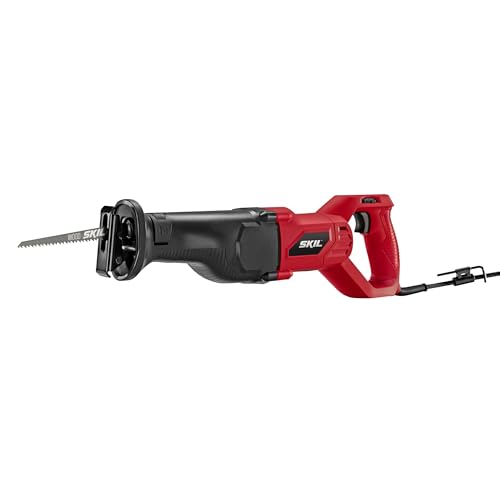
The 9206-02 is the budget tier entry, a corded saw with a 7.5-amp motor aimed at homeowners and occasional demolition rather than daily trade use. It still covers the fundamentals well: a 1-1/8 inch stroke, variable speed control through a dial and trigger, and a counter-balance system that damps the worst of the vibration a small saw produces.
A heavy-duty metal gear housing protects the drive train, the pivoting foot keeps the blade planted against the work, and blade changes need no tools. It includes a wood-cutting blade and a hex key in the box. Thick structural demolition will push this motor harder than the 12-amp models above, but for pruning, pallet breakdown, PVC and light tear-out work around the house, it delivers the core reciprocating saw experience at the lowest commitment in the guide.
Specs
- Power source: Corded electric, 120V
- Motor: 7.5 amp
- Speed: Variable speed, up to 2,700 SPM
- Stroke length: 1-1/8 inch
- Blade change: Tool-less
- Extras: Counter-balance vibration control, metal gear housing, pivoting foot, wood blade and hex key included
Frequently Asked Questions
What is the difference between a reciprocating saw and a Sawzall?
Sawzall is the trademark name Milwaukee uses for its reciprocating saws, so a Sawzall is one brand of reciprocating saw rather than a separate tool type. Every saw in this guide, whatever the badge, uses the same back-and-forth blade motion and accepts the same universal half-inch shank blades.
Which blade should I use for cutting metal pipe?
Choose a bi-metal blade with a fine tooth count, around 14 to 18 teeth per inch, and run the saw at a moderate speed so the teeth do not overheat. Coarse wood blades skate on pipe and strip their teeth quickly, while a fine bi-metal blade tracks smoothly and survives repeated cuts in conduit, copper and steel.
Is a corded or cordless reciprocating saw better for demolition?
Corded 12-amp saws hold full power through hours of continuous demolition and never wait on a charger, which suits large tear-outs near an outlet. Cordless saws win on ladders, roofs and yards where dragging a cord is a hazard, and brushless models now match corded cutting speed for typical framing and pipe work.
Can a reciprocating saw cut tree roots and branches?
Yes, with a coarse pruning blade fitted, a reciprocating saw cuts branches and exposed roots cleanly and reaches into spots a chainsaw handles poorly. Use a long, aggressive-tooth blade, keep the shoe braced against the limb, and let the stroke do the work rather than forcing the saw forward.
Conclusion
For sustained demolition at a fixed site, the Milwaukee 6519-31 and the DEWALT DWE305 deliver 12-amp corded power, with the DEWALT adding a four-position clamp for flush cuts. Cordless buyers should match the saw to their battery shelf: the compact brushless DEWALT DCS367B for tight spaces, or the long-stroke Makita XRJ04Z for full-size cutting on the 18V LXT platform. On a budget, the SKIL 9206-02 covers household tear-out and yard work with the same stroke length as the bigger saws. Whichever tier you choose, keep a mixed pack of wood, bi-metal and demolition blades on hand, because the blade, more than the badge, decides how cleanly each cut goes.