Key takeaways
- Compare ear muffs vs earplugs for workshop noise: NRR ratings from 24 to 37 dB, fit and comfort trade-offs, Bluetooth audio, and bulk foam plugs.
- Top Pick: DECIBEL DEFENSE Professional Safety Ear Muffs
- Runner-up: 3M PELTOR X5A Over-the-Head Earmuffs
- Also consider: 3M WorkTunes Connect Hearing Protector with Bluetooth
Workshop tools are loud in a way that adds up: a table saw, planer, router, or angle grinder produces sustained noise at levels where hearing protection is standard shop equipment, not an accessory. For most home workshops, the real decision is not whether to wear protection but which form: muffs that cup over the ears, or foam plugs that seal in the ear canal.
This guide compares three ear muffs and two disposable foam earplugs across what actually separates them: the Noise Reduction Rating (NRR) on the label, how protection depends on fit, how often you take it on and off, and compatibility with glasses, caps, and face shields. Every rating below is the manufacturer’s lab rating for that exact model, and lab ratings assume a correct fit — which matters more than any single number.
As an Amazon Associate, we earn from qualifying purchases.
Quick answer
Neither style wins outright. Foam earplugs carry the highest lab ratings here, NRR 32 and 33 dB, but only when rolled down and inserted deeply. Ear muffs are faster to put on and take off between cuts, and the Bluetooth muff adds calls and audio. Match the style to how often you remove it.
DECIBEL DEFENSE Professional Safety Ear Muffs
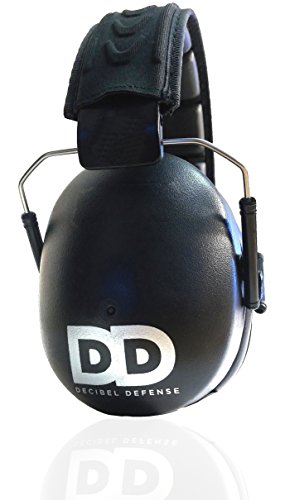
The DECIBEL DEFENSE muff is the high-rating passive pick here. The manufacturer states an NRR of 37 dB — the highest figure among the five products in this guide, consistent across its title, description, and spec table. Treat it as what every NRR is: a lab rating under fitted conditions, not a promise of what any wearer will measure in a real shop.
The design is a straightforward over-the-head muff with a padded, adjustable headband. It folds for storage, and at 12 ounces it is light enough for long sessions. There are no electronics and nothing to charge, which suits dusty, rough-and-tumble workshops. This listing is the Black version in the Regular size only.
It fits woodworkers who want one simple muff for loud intermittent tools — saws, planers, routers — taken off and on all day. Skip it if you want audio or call handling, or work in serious heat.
| Spec | Detail |
|---|---|
| Type | Over-the-head ear muff, foldable |
| NRR | 37 dB (manufacturer stated) |
| Electronics | None, passive |
| Headband | Padded, adjustable |
| Color / size | Black / Regular |
| Weight | 12 ounces |
| Certifications claimed | ANSI S3.19, CE EN 352-1 |
| ASIN | B01BEENYCQ |
3M PELTOR X5A Over-the-Head Earmuffs

The PELTOR X5A is 3M’s high-attenuation muff for industrial settings, rated NRR 31 dB in its US listing, corroborated by 3M’s own product data. Its deep cups are aimed at very loud environments — construction, manufacturing, maintenance — much like a shop running a planer or router table.
One caution when researching this model: European and UK sources rate the X5A under the SNR system, which produces a different number from the US NRR. The systems are not interchangeable, so judge this muff by its US NRR of 31 dB only.
PELTOR is a known counterfeit target on marketplaces, so buy from Amazon.com itself or 3M’s own storefront rather than a cheap third-party offer. It fits users who want a proven industrial muff without electronics, and who accept that high-attenuation cups are bulky.
| Spec | Detail |
|---|---|
| Type | Over-the-head earmuff |
| NRR | 31 dB |
| Electronics | None, passive |
| Color | Black |
| Headband | Over-the-head, electrically insulated (dielectric) |
| Rating note | CSA Class AL per 3M product data |
| ASIN | B00CPCHBCQ |
3M WorkTunes Connect Hearing Protector with Bluetooth

The WorkTunes Connect trades raw rating for features. This listing — model 90543H1-DC-PS — is rated NRR 24 dB, the lowest figure here, and adds Bluetooth audio through high-fidelity speakers, an integrated microphone for calls, a single-button interface, and Audio Assist voice guidance. A built-in rechargeable battery has auto shut-off and a low-battery indicator, and the flexible headband has cutouts for caps.
That trade-off defines who it suits: for long, continuous sessions of moderate-noise work — sanding, assembly, finishing — it is the most pleasant option here. For the loudest tools, its 24 dB rating leaves less margin than the plugs or higher-rated muffs.
Buy by model number: 3M sells several WorkTunes generations under similar names with different ratings, and the 24 dB figure belongs only to the 90543 version listed here. As with the PELTOR, buy from Amazon.com or the 3M storefront to avoid counterfeits.
| Spec | Detail |
|---|---|
| Type | Over-the-head earmuff with Bluetooth |
| Model | 90543 / 90543H1-DC-PS |
| NRR | 24 dB |
| Audio | Bluetooth, high-fidelity speakers |
| Calls | Integrated microphone |
| Controls | Single-button interface, Audio Assist voice guidance |
| Battery | Built-in rechargeable, auto shut-off, low-battery indicator |
| ASIN | B0723CYHPZ |
Howard Leight Laser Lite Earplugs, 200 Pairs

The Laser Lite is the bulk disposable option: a 200-pair box of uncorded foam plugs. The manufacturer rates them NRR 32 dB — higher than two of the three muffs here — and the plugs use a self-adjusting, low-pressure foam with a smooth, soil-resistant closed-cell skin.
The contoured T-shape is easy to grip and insert, and the small profile suits smaller ear canals, a common reason foam plugs feel uncomfortable. The pink and yellow hi-vis colors are easy to spot on a bench or in sawdust.
A 200-pair box fits shared workshops and anyone who wants a stocked supply by the shop door. The trade-off is waste and routine: disposables only deliver their rating when a fresh pair is rolled down and inserted deeply, every time.
| Spec | Detail |
|---|---|
| Type | Disposable foam earplugs, uncorded |
| Model | LL-1 (3301105) |
| NRR | 32 dB |
| Material | Foam, self-adjusting low-pressure, closed-cell skin |
| Pack | 200 pairs, individually packaged in polybags |
| Color | Pink / yellow hi-vis |
| ASIN | B0007XJOLG |
Moldex Pura-Fit 6800 Earplugs, 50 Pairs

The Pura-Fit 6800 carries the highest plug rating in this guide: NRR 33 dB, consistent across its listing title and spec fields. Like the Laser Lite, it is an uncorded, disposable foam plug. Moldex’s stated directions sum up the technique that decides whether any foam plug works: roll it down, insert it, and hold it while the foam expands to seal.
The 50-pair pack is the practical difference from the Howard Leight box: fifty pairs suit a single regular user, where a 200-pair case would sit open for years.
Check the pack size when ordering — this listing is the 50-pair pack of the uncorded 6800, and Moldex also sells larger industrial boxes and a corded sibling under a different model number. It fits solo woodworkers who prefer plugs full-time, including under a face shield or respirator where muff cups get in the way.
| Spec | Detail |
|---|---|
| Type | Disposable foam earplugs, uncorded |
| Model | 6800 |
| NRR | 33 dB |
| Material | Foam |
| Pack | 50 pairs |
| Color | Bright green |
| ASIN | B01M6AI2HF |
How to choose
Start with what the NRR does not tell you: it is a laboratory rating measured under fitted conditions, and real-world protection is usually lower, depending heavily on fit. A shallowly inserted plug, or a muff worn over thick glasses arms that break the cushion seal, will not deliver its printed number. Fit and consistent use beat a small rating advantage every time.
Next, count how often you take protection off. For a cut, check, adjust, cut workflow, muffs win on convenience — they lift off and settle back in a second, so you will actually wear them for every cut. For continuous wear, plugs avoid the headband pressure and heat buildup that make muffs uncomfortable by hour two.
Consider the rest of your gear. Plugs sit under face shields, respirators, welding helmets, and caps without interfering. Muffs can clash with helmet straps and shield frames, and glasses arms reduce their seal; the WorkTunes cap cutouts soften that problem without removing it.
Then weigh hygiene and habit. Disposable plugs are single-use by design; a fresh pair each session keeps the seal reliable. Muff cushions collect sweat and dust and should be wiped down. For the loudest sustained work, plugs underneath muffs — double protection — add protection beyond either device alone. Finally, buy brands like 3M from the brand’s own storefront or an authorized seller; counterfeit hearing protection is a documented problem.
Who should skip
Skip foam plugs if you cannot or will not insert them properly. A plug sitting at the canal opening instead of deep inside delivers a fraction of its rating, and no NRR on a box fixes technique. Muffs are the honest choice in that case.
Skip ear muffs if you work in a hot shop for hours or wear a helmet or face shield for most tasks; plugs stay comfortable where cups do not. Skip the WorkTunes specifically if your main tools are the loudest in the shop — its 24 dB rating is the smallest margin here, and audio features do not compensate.
Skip the 200-pair Laser Lite box if you work alone and rarely use plugs; the 50-pair Pura-Fit pack matches a single user’s pace better. And skip disposables altogether if single-use waste is a deciding factor — none of these plugs are reusable.
FAQ
What does NRR mean, and is a higher number always better?
The Noise Reduction Rating is a lab-measured figure, in decibels, for how much noise a device reduces when fitted correctly. Higher means more rated reduction, but fit matters as much as the number: a correctly inserted NRR 32 plug protects better in practice than a muff worn loosely over glasses arms.
How do I insert foam earplugs correctly?
Roll the plug between clean fingers into a thin, crease-free cylinder. Reach over your head with the opposite hand, pull the ear up and back to straighten the canal, insert the plug deeply, and hold it while the foam expands. Both plug brands here print the same roll, insert, and hold sequence.
Can I wear earplugs and ear muffs at the same time?
Yes. Wearing plugs under muffs — double protection — is a recognized approach for very loud or sustained noise and adds protection beyond either device alone. It suits long planing or routing sessions, though the combined result is not simply the two NRR figures added together.
Final verdict
For most home workshops, the decision comes down to workflow. Choose foam plugs — the Moldex Pura-Fit 6800 for the highest rating in a single-user pack, or the Howard Leight Laser Lite for a shared shop supply — if you wear protection continuously, work in heat, or combine it with shields and respirators. Choose muffs for a workflow of short loud bursts: the DECIBEL DEFENSE for the highest manufacturer-stated rating in a passive design, or the PELTOR X5A for an industrial build at NRR 31 dB. Pick the WorkTunes Connect only when audio and calls during long, moderate-noise sessions matter more than maximum rating. Whichever style you choose, fit it properly and wear it for every cut — that habit protects more than any spec on this page.