Key takeaways
- Compare five of the best bench dogs for 3/4-inch workbench holes, from nylon dogs with rubber brakes to anodized aluminum stops with side springs.
- Top Pick: Kreg KKS1070 Bench Dogs
- Runner-up: Big Horn 19112 Small Bench Dogs
- Also consider: POWERTEC 71500 Deluxe Bench Dogs
The best bench dogs for most workbenches are the Kreg KKS1070 Bench Dogs, a set of four reinforced nylon dogs with solid rubber bench brakes that sit on top for a non-slip work surface during routing and sanding. If your bench sees heavy planing work and you want metal instead, the Big Horn 19112 Small Bench Dogs pair anodized aluminum bodies with side-mounted springs and cross-hatched faces that grip stock without marring it. Every pick in this roundup fits the standard 3/4-inch (19 mm) dog hole, so the real decision comes down to material, retention style, and how many stops you want in the box.
A bench dog is a simple peg that drops into a hole in the benchtop and stands proud of the surface as a stop. Paired with a tail vise, a face vise fitted with its own dog, or a holdfast, it traps a board so you can plane, chisel, sand, or rout it without the piece skating across the bench. The modern versions below refine the idea with rubber brake pads, spring clips that hold height, and faces shaped for square or curved stock. This guide compares five current sets on the specs their makers publish: hole fit, material, dog length, retention method, face design, and pack count.
As an Amazon Associate, we earn from qualifying purchases.
Table of Contents
- Quick Answer
- How These Dogs Were Compared
- 1. Kreg KKS1070 Bench Dogs
- 2. Big Horn 19112 Small Bench Dogs
- 3. POWERTEC 71500 Deluxe Bench Dogs
- 4. Housolution 6 Pack Bench Dogs
- 5. EZTOOL 6 Pack Bench Dogs
- How to Choose Bench Dogs
- Pairing Dogs With Vises and Holdfasts
- FAQ
- Conclusion
- Product and ASIN Reference
Quick Answer
Short on time, here is the shortlist. The Kreg KKS1070 set is the best all-around pick because each dog arrives with a rubber bench brake that turns the stop into a non-slip support for routing and sanding. The Big Horn 19112 is the premium metal pick, with anodized aluminum bodies, side springs, and cross-hatched faces angled to pull stock down as pressure builds. The POWERTEC 71500 eight-pack is the mid-range value for outfitting a whole bench, and its removable EVA inserts double as painter’s points. The Housolution and EZTOOL six-packs cover the budget end in aluminum alloy, with non-slip pads on the Housolution set and a red finish on the EZTOOL set.
How These Dogs Were Compared
Each set below was compared on the details its maker publishes. Hole fit comes first, because a dog built for a 3/4-inch hole will not seat in a 20 mm multifunction table, and every pick here is published for the 3/4-inch (19 mm) standard. Material comes next: nylon is kind to plane irons and finished surfaces, while aluminum alloy adds rigidity for heavy planing strokes. Retention matters too, since a plain peg can sink or spin in its hole, while side-spring designs hold their set height. Face design rounds out the comparison, covering squared pads, curved sides for irregular stock, cross-hatching for grip, and removable brake inserts. Pack count and published dog length finish the picture, since length decides how thick a benchtop the dog can work through.
1. Kreg KKS1070 Bench Dogs

The Kreg KKS1070 set is the most complete small kit in this roundup. It includes four bench dogs molded from reinforced nylon, sized for standard 3/4-inch dog holes, and each dog arrives with a solid rubber bench brake. The brake sits on top of the dog and turns it into a raised, non-slip support, the configuration Kreg publishes for routing and sanding work where a board needs to stay put without any clamping pressure. Used without the brakes, the dogs work as plain stops against a vise for planing and chiseling. Nylon is forgiving around sharp edges: a plane iron or chisel that clips a nylon dog will not chip the way it would on steel. As the premium pick here, it is the set to choose when the brake system matters more than pack size.
Specs
- Hole fit: 3/4 inch (19 mm)
- Material: Reinforced nylon
- Included: 4 bench dogs and 4 bench brakes
- Brake material: Solid rubber
- Model number: KKS1070
- Published uses: Workholding for routing and sanding, plain stops for planing
2. Big Horn 19112 Small Bench Dogs

The Big Horn 19112 dogs take the traditional metal route. Each dog is machined from anodized aluminum, a body material the maker positions as corrosion resistant and durable while staying forgiving if a hand plane blade ever glances off it. A side-mounted spring mechanism presses against the wall of the hole, keeping the dog from sinking below the surface or rotating while a board is worked against it. The working face is cross-hatched for grip and ground with a 2-degree negative slope, an angle that helps pull the workpiece down toward the benchtop as planing pressure pushes it into the stop. The dogs fit any 3/4-inch diameter hole at least 2 inches deep, so they drop into the same holes a holdfast uses. Sold as a set of two, they are a premium choice for a traditional bench with a tail vise, where two good dogs do most of the work.
Specs
- Hole fit: 3/4 inch diameter, minimum hole depth 2 inches
- Material: Anodized aluminum
- Retention: Side-mounted spring mechanism
- Face: Cross-hatched with a 2-degree negative slope
- Pack count: 2 dogs
- Model number: 19112
3. POWERTEC 71500 Deluxe Bench Dogs

The POWERTEC 71500 set is built for woodworkers who want stops everywhere on the bench at once. The box holds eight nylon bench dogs, each 2 inches long, machined to press into any drilled 3/4-inch dog hole. Every dog carries a grommet-style bench brake insert made of EVA rubber, which adds a non-marring, anti-slip face for routing, cutting, and painting tasks. The inserts are removable, so the same dog can present a plain squared clamping pad when you want a hard stop for planing. The body profile gives you both a square side and a curved side, covering square stock and irregular shapes with one tool. Two 3/16-inch holes in each dog accept dowels, turning the dog into a painter’s point that lifts a finished piece off the bench while a coating dries. That mix makes this mid-range eight-pack the most versatile box in the roundup.
Specs
- Hole fit: 3/4 inch
- Dog length: 2 inches
- Material: Nylon body with EVA rubber brake inserts
- Brake inserts: Removable grommet style
- Face options: Squared clamping pad, square and curved sides
- Extra feature: Two 3/16-inch dowel holes per dog for painter’s points
- Pack count: 8 dogs
- Model number: 71500
4. Housolution 6 Pack Bench Dogs
The Housolution six-pack brings aluminum alloy construction to a mid-range box. Each dog is machined from aluminum alloy and published for the universal 3/4-inch (19 mm) hole size, a direct fit for traditional benches and worktables drilled on the imperial standard. Non-slip pads on the contact face add friction so stock resists creeping during sanding and routing passes. Aluminum alloy gives these dogs a longer service life and better wear resistance than plastic or nylon dogs in high-frequency use, per the maker’s published positioning, while staying light enough for a tool bag. Six dogs is enough to fence a panel on two sides, set stops for a routing template, and keep spares in the drawer. Choose this set when you want metal dogs in quantity without stepping up to the premium pairs.
Specs
- Hole fit: 3/4 inch (19 mm)
- Material: Aluminum alloy
- Face: Non-slip pads
- Pack count: 6 dogs
- Model number: HW250097
- Published fit: Traditional benches and multifunction worktables with 3/4-inch holes
5. EZTOOL 6 Pack Bench Dogs
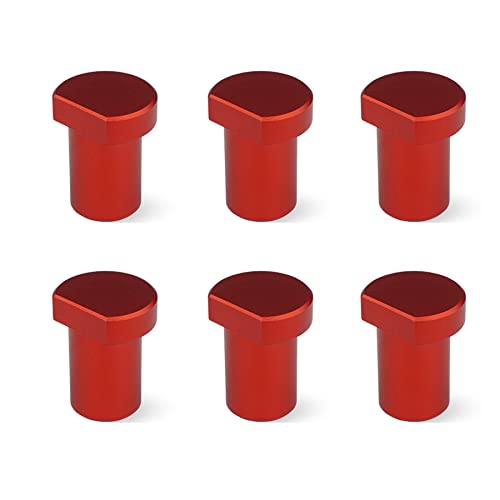
The EZTOOL six-pack is the budget way to fill a row of dog holes. The dogs are cast and machined from aluminum alloy and finished in red, a color that stands out against a maple or MDF benchtop and makes a dropped dog easy to find in shavings. They are published for 3/4-inch (19 mm) dog holes and sold as bench brake inserts as well as stops, so the flat top face can support work during sanding while the body registers in the hole. Six identical dogs let you build a fence along a line of holes, brace a board at two points against a vise dog, or park stops at the corners of a panel during glue-up layout. There are no springs or pads here, just simple alloy pegs, which keeps the design easy to clean and hard to break. For a first set on a new bench, this budget box covers the basics with nothing extra to lose.
Specs
- Hole fit: 3/4 inch (19 mm)
- Material: Aluminum alloy
- Color: Red
- Pack count: 6 dogs
- Part number: CCX002319R6PC
- Published uses: Workbench stops and bench brake inserts for sanding support
How to Choose Bench Dogs
Begin with hole size, because nothing else matters if the dog does not fit. Most traditional benches and many factory worktables use 3/4-inch round holes, while European-style multifunction tables often use 20 mm holes. The two sizes are close on paper but not interchangeable, and every dog in this roundup is published for 3/4-inch (19 mm) holes. Measure a hole with a drill bit shank or calipers before ordering if you are unsure which standard your top follows.
Next, match dog length to benchtop thickness. A dog needs enough body in the hole to stay registered under side pressure, and some makers publish a minimum hole depth, such as the 2 inches the Big Horn dogs call for. Tops around 1-1/2 to 2 inches thick suit most 2-inch dogs well.
Material decides how the dog treats your tools and your work. Nylon dogs, like the Kreg and POWERTEC sets, will not chip a plane iron or dent a finished edge. Aluminum alloy dogs, like the Big Horn, Housolution, and EZTOOL sets, feel more rigid under heavy planing strokes and shrug off years of shop wear. Pick nylon for finishing benches and aluminum for a bench that sees rough dimensioning work.
Retention is the quiet detail that separates frustrating dogs from good ones. A plain peg relies on a snug hole, and it can sink flush or spin when a board shifts. Side springs press on the hole wall and hold the height you set, which matters when you raise dogs for thin and thick stock. If your bench holes are worn or slightly oversized, a spring design compensates better than a plain peg.
Finish with pack count and face style. Two premium dogs serve a tail-vise bench where the vise does half the holding. Six or eight dogs earn their keep when you fence panels, support work on brake pads, or run several stops at once. Squared faces suit flat stock, curved sides cradle irregular pieces, and cross-hatched or padded faces add grip.
Pairing Dogs With Vises and Holdfasts
A bench dog rarely works alone. The classic setup pairs a row of dogs in the benchtop with a dog built into the jaw of a tail vise: the board sits between them, the vise closes, and the panel is trapped flat for planing. On benches without a tail vise, a face vise with a pop-up dog in its jaw does the same job from the front of the bench. Holdfasts add downward pressure instead, seating in the same 3/4-inch holes and pinning stock too wide or oddly shaped for the vise. Dogs also work without any vise when they carry brake pads: a board resting on rubber brakes resists the sideways push of a sander or router through friction alone, the setup the Kreg brakes and POWERTEC inserts are published for. Mix the methods freely, and one row of holes covers nearly every holding job a bench is asked to do.
FAQ
What size bench dogs do I need for my workbench?
Most benches use 3/4-inch (19 mm) round dog holes, and every set in this roundup fits that size. Some multifunction tables use 20 mm holes instead, which are not interchangeable with 3/4-inch dogs. Measure your holes before ordering if you do not know which standard your benchtop follows.
How many bench dogs should I buy?
Two dogs are enough for classic tail-vise work, where one dog in the bench and one in the vise jaw trap a board between them. Sets of six or eight make more sense when you fence panels, support work on brake pads, or want stops at several bench positions at once.
Are nylon or aluminum bench dogs better?
Nylon dogs are kinder to plane irons and finished surfaces, since an edge that clips one will not chip, and they suit routing and sanding setups with rubber brakes. Aluminum dogs feel more rigid under heavy planing pressure and resist wear over years of use. The better choice follows the work your bench sees most.
Can bench dogs hold a board without a vise?
Yes, when the dogs carry non-slip brake pads or inserts. A board resting on rubber brakes resists the sideways force of sanding and routing through friction, which is the setup the Kreg bench brakes and the POWERTEC EVA inserts are made for. For planing, a vise or holdfast should still supply the main holding force.
Conclusion
Bench dogs are small, inexpensive, and responsible for a large share of the holding a workbench ever does. The Kreg KKS1070 set is the strongest all-around buy here, thanks to the rubber bench brakes that turn each dog into a non-slip support for routing and sanding. The Big Horn 19112 pair is the premium metal option, with anodized aluminum bodies, side springs, and cross-hatched faces built for serious planing work. The POWERTEC 71500 eight-pack covers a whole bench in the mid-range and doubles as painter’s points, while the Housolution and EZTOOL six-packs deliver aluminum dogs on a budget. Confirm your hole size and match the dog length to your benchtop, and any of these five sets will serve the bench well.