Key takeaways
- Compare the best concrete edgers and groovers by blade size, radius, lip depth, material and handle, with five picks for sidewalks, patios and slabs.
- Top Pick: MARSHALLTOWN 136D Curved Hand Edger
- Runner-up: Goldblatt Blue Steel Concrete Edger, 6 x 6 Inch
- Also consider: Bon Tool 62-470 Stainless Steel Curved End Edger
For most sidewalks, patios and driveway slabs, the best concrete edger is a 6 by 3 inch hand edger with a 3/8 or 1/2 inch radius, because that size sits flat on the surface, rides the form board without rocking, and rounds the edge enough to resist chipping. The MARSHALLTOWN 136D is the classic example, with a high carbon steel blade, curved ends and a DuraSoft handle. If your runs are long and straight, the wider Goldblatt 6 by 6 inch blue steel edger tracks more steadily, and for the control joints that tell a slab where to crack, the MARSHALLTOWN 833D zinc groover cuts a clean 1/2 inch deep groove. Below, all five picks are matched to the jobs they suit, using published specifications only.
As an Amazon Associate, we earn from qualifying purchases.
Table of Contents
- How to Choose a Concrete Edger
- MARSHALLTOWN 136D Curved Hand Edger
- MARSHALLTOWN 162BD Straight Edger, 6 x 6 Inch
- Goldblatt Blue Steel Concrete Edger, 6 x 6 Inch
- Bon Tool 62-470 Stainless Steel Curved End Edger
- MARSHALLTOWN 833D Zinc Hand Groover
- Frequently Asked Questions
- Conclusion
- Product and ASIN Reference
How to Choose a Concrete Edger
Radius. The radius is the curve the tool presses into the edge of the slab. A 1/4 inch radius leaves a crisp, nearly square edge that suits steps, curbs and decorative pads. A 3/8 or 1/2 inch radius leaves a softer, rounder edge that sheds knocks from tires, shovels and mower wheels, which is why it is the common choice for sidewalks and driveways. Pick one radius for a pour and keep it the same around the whole slab, because a mixed edge looks uneven once the concrete cures.
Lip depth. The lip is the part of the blade that runs down the side of the form. A deeper lip guides the tool along the form board and shapes more of the slab edge, which helps on thicker pours. A shallow lip suits thin slabs, repairs and tight spots where a deep lip would catch.
Blade size. Hand edgers run from about 6 by 2-1/2 inches to 6 by 6 inches. A longer, wider blade rests on more surface and is less likely to rock and leave a ridge. A narrow blade steers more easily around curves, into corners and along short runs.
Blade material. High carbon steel and blue steel are stiff, take a fine finish and glide well, but they rust if they go back on the shelf wet, so they need drying and a light coat of oil. Stainless steel gives up a little of that glide in exchange for easy care, since it resists rust between pours. Solid zinc, used on the groover in this guide, is heavy and long wearing, and its weight helps the bit sit down into the surface.
Handle. A soft grip such as the DuraSoft handle on the MARSHALLTOWN tools is easier to hold with wet gloves than bare wood, and it spreads pressure across the palm during a long edge. Wood handles are the traditional option and give a firm, direct feel. Either way, the mounting should be welded or locked to the blade so the handle does not flex under pressure.
Edger or groover. An edger rounds the perimeter of a slab. A groover cuts control joints across the slab so shrinkage cracks follow the joint instead of wandering. A new sidewalk or patio usually needs both tools, one for the edges and one for the joints.
MARSHALLTOWN 136D Curved Hand Edger

The 136D is the edger most finishers picture when the job is a home sidewalk, patio or pad. Its blade measures 6 by 3 inches, long enough to sit flat and ride the form, narrow enough to follow a gentle curve along a garden bed. The ends are curved with a soft radius, which helps the tool change direction without digging a corner into the surface.
The profile is a 3/8 inch radius with a 1/2 inch lip, a middle-ground shape that rounds the edge enough to resist chipping while keeping the edge line fairly defined. The blade is high carbon steel, so it takes a fine finish and holds its shape, but it needs care: wash it before the concrete sets on it, dry it, and wipe on a light coat of oil before storage. The DuraSoft handle gives a cushioned grip that stays comfortable with wet gloves, and the tool is made in the USA with global materials.
Specs
- Blade: 6 x 3 inches
- Blade material: High carbon steel
- Radius: 3/8 inch
- Lip: 1/2 inch
- Ends: Curved, soft radius
- Handle: DuraSoft soft grip
- Tier: Mid-range
MARSHALLTOWN 162BD Straight Edger, 6 x 6 Inch
The 162BD takes the opposite approach to the 136D: a wide, straight 6 by 6 inch blade that covers more surface with each pass. That broad footprint makes it harder to rock on long, straight runs such as a driveway edge, and the straight ends suit work that runs corner to corner without curves.
The blade is blue steel, a high carbon steel with a blued finish that offers some resistance to rust, though it is not stainless and still wants drying and oil after use. The profile is a 3/8 inch radius with a 1/2 inch lip, the same middle-ground shape as the 136D, so the two tools leave a matching edge if you use the narrow one on curves and this one on the straights. The mounting is welded to the blade for a sturdy bond, and the DuraSoft handle matches the rest of the MARSHALLTOWN line. It is made in the USA.
Specs
- Blade: 6 x 6 inches
- Blade material: Blue steel
- Radius: 3/8 inch
- Lip: 1/2 inch
- Ends: Straight
- Handle: DuraSoft soft grip
- Tier: Premium
Goldblatt Blue Steel Concrete Edger, 6 x 6 Inch

Goldblatt also fields a 6 by 6 inch edger, but with a deeper profile than the MARSHALLTOWN 162BD. Its 1/2 inch radius rounds the edge more fully, and its 5/8 inch lip runs further down the side of the slab, giving the tool a firmer guide along the form board on thicker pours. If your edges take traffic from vehicles or loaded wheelbarrows, that rounder, deeper-shaped edge is the more forgiving shape.
The blade is high carbon blue steel with a polished, flat bottom, which the maker says reduces friction as the tool moves. One side of the blade forms the edge while the other side floats the surface beside it. The blade and handle frame are locked together with multiple screws rather than a single mounting point, and the handle is a soft, non-slip grip with an ergonomic curve. As with any blue steel tool, dry it after cleaning and oil it lightly before it goes away.
Specs
- Blade: 6 x 6 inches
- Blade material: High carbon blue steel
- Radius: 1/2 inch
- Lip: 5/8 inch
- Bottom: Polished, flat
- Handle: Soft non-slip grip, frame locked with multiple screws
- Tier: Mid-range
Bon Tool 62-470 Stainless Steel Curved End Edger

The 62-470 is the small, crisp option in this guide. Its blade is the narrowest here at 6 by 2-1/2 inches, and its 1/4 inch radius with a 3/8 inch depth leaves the tightest edge of the five picks, one that reads almost square from a short distance. That profile suits steps, curbs, countertops and small decorative pads where a soft round edge would look out of place.
The blade is stainless steel, which makes this the easy-care pick for an occasional user: it resists rust in a damp garage between pours and wipes clean. The ends are curved to help prevent gouging when you reverse direction, and Bon fits a comfort grip handle. The narrow blade has less bearing surface than the 6 by 6 inch tools, so it rewards a lighter hand on long runs, but it steers into corners and around curved forms more easily than any wide blade. The tool is made in the USA.
Specs
- Blade: 6 x 2-1/2 inches
- Blade material: Stainless steel
- Radius: 1/4 inch
- Depth: 3/8 inch
- Ends: Curved
- Handle: Comfort grip
- Tier: Budget
MARSHALLTOWN 833D Zinc Hand Groover
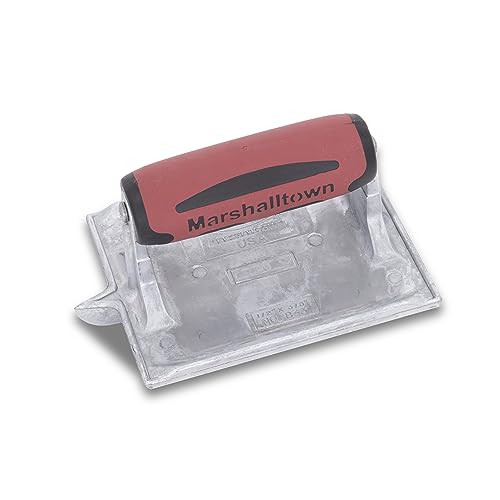
The 833D is not an edger at all. It is a dedicated hand groover, included here because a slab needs control joints as much as it needs finished edges. Concrete shrinks as it cures, and a groover cuts a planned weak line across the surface so the crack follows the joint instead of crossing the slab at random.
The blade is solid zinc at 6 by 4-3/8 inches. MARSHALLTOWN describes the zinc as high quality and long wearing, and the weight of the solid blade helps the bit sit down into fresh concrete. The bit cuts a groove 1/2 inch deep with a 1/4 inch radius, and it is beveled and finely finished to cut sharp, clean grooves without gouging. One honest limit: a common rule is that a control joint should reach about a quarter of the slab depth, so a 1/2 inch groove suits thin slabs, steps and decorative work, while a full-depth driveway slab may also need a deeper groover or a saw cut after curing. The handle is the same DuraSoft grip used on the MARSHALLTOWN edgers, and the groover is made in the USA. Run it against a straight board so the joint stays true.
Specs
- Blade: 6 x 4-3/8 inches
- Blade material: Solid zinc
- Groove depth: 1/2 inch
- Groove radius: 1/4 inch
- Bit: Beveled, finely finished
- Handle: DuraSoft soft grip
- Tier: Premium
Frequently Asked Questions
What radius should I choose for a sidewalk or driveway?
A 3/8 or 1/2 inch radius is the common choice for sidewalks and driveways. The rounder edge compacts the corner of the slab and resists chipping from tires, shovels and mower wheels better than a sharp square corner. A 1/4 inch radius is better saved for steps, curbs and decorative pads where a crisp, nearly square line looks right.
When should concrete be edged during a pour?
Edge after the slab has been screeded and floated, once the surface water has left and the concrete is firm enough to hold the shape the tool presses in, but still soft enough for the blade to glide. Most finishers edge once early to set the line, then run the edger again after later floating passes to clean the edge up before the final finish.
Do I need a groover as well as an edger?
For a new slab, yes. The edger only shapes the perimeter, while the groover cuts control joints across the surface that guide shrinkage cracks into straight, planned lines. Small pads and single steps can sometimes go without a joint, but sidewalks, patios and driveways should have joints at regular spacing, cut with a groover while the concrete is fresh or with a saw after it cures.
How do I keep a steel edger from rusting between pours?
Wash the blade before any concrete sets on it, dry it fully, and wipe on a light coat of oil before storage. That routine matters most for high carbon and blue steel blades, which rust quickly if they are put away wet. Stainless steel and zinc tools forgive a missed wipe-down, but cleaning them straight after use still keeps hardened concrete out of the radius and the groove bit.
Conclusion
For a single all-purpose hand edger, the MARSHALLTOWN 136D covers most home pours with its 6 by 3 inch blade and middle-ground profile. Long straight runs favor a wide blade, and both the MARSHALLTOWN 162BD and the Goldblatt 6 by 6 inch edger sit flatter and track more steadily, with the Goldblatt adding a rounder radius and a deeper lip. The Bon 62-470 handles the crisp, small-radius work on steps and small pads, and its stainless blade asks the least care. Whichever edger you pick, pair it with the MARSHALLTOWN 833D groover so the slab gets its control joints as well as its finished edges, and keep the radius the same around the whole pour.