Key takeaways
- The best margin trowels for tile and masonry compared by blade size, steel type and handle, from forged premium picks to simple budget workhorses.
- Top Pick: Marshalltown Premier Line Margin Trowel 52D — Premium
- Runner-up: Marshalltown Masonry Margin Trowel 97 — Budget
- Also consider: Goldblatt G06982 Professional Margin Trowel — Budget
A margin trowel is the small, flat-nosed hand tool that handles the work a brick trowel or notched trowel cannot reach: scooping mortar or thinset out of a bucket, spreading adhesive along edges and corners, back-buttering tile, and cleaning up joints in tight spaces. The best margin trowels share a simple formula — a flat rectangular blade about 5 to 6 inches long and 2 inches wide, a steel that holds its edge without flexing too much, and a handle that stays comfortable through repetitive scooping. If you want one recommendation up front, the Marshalltown Premier Line 52D is the strongest all-round pick here, with a one-piece forged high carbon steel blade and a cushioned DuraSoft handle in the classic 5 x 2 inch format.
The five picks below cover the main buying paths. Two Marshalltown models anchor the list: the premium forged 52D and the budget wood-handled 97, a design that has been a trade staple for decades. The Goldblatt G06982 adds a comfort grip at a budget tier, the OX Pro brings a precision-ground carbon steel blade with a finger-protected soft grip at mid-range, and the Bon Tool 11-838 offers a traditional wood handle with extra length for reach. Every specification in this guide comes from published manufacturer and listing data, and each product is grouped into a budget, mid-range or premium tier so you can match the tool to how often you plan to use it.
As an Amazon Associate, we earn from qualifying purchases.
Table of Contents
- What a margin trowel does
- The 5 best margin trowels
- How to choose a margin trowel
- Frequently asked questions
- Conclusion
- Product and ASIN Reference
What a margin trowel does
A margin trowel is defined by its blade: flat, rectangular and square-nosed, usually 5 or 6 inches long and 1 1/2 to 2 inches wide. That shape is deliberate. The flat nose pushes material into corners and along the edges of a tile or brick course where a pointed trowel would leave gaps, and the narrow width fits inside a mortar tub or a bucket of thinset so the tool doubles as a scoop and a mixing paddle for small batches.
Tile setters use margin trowels to back-butter tile, clear adhesive from grout joints before it sets, and work thinset under toe kicks, behind cabinets and around plumbing stubs. Masons use them to place small amounts of mortar for repairs, tuck material into tight joints, and clean the face of brickwork as they go. Because the tool is small and inexpensive compared with larger trowels, most tradespeople own more than one — a better forged model for daily work and a plainer one for mixing and scraping, where the blade takes more abuse.
Blade material and handle design are the two decisions that matter. High carbon steel blades are hard, hold a crisp edge and develop a working flex that experienced masons like, but they need to be wiped dry after use to keep rust away. Handles come in plain wood, cushioned soft grip versions, and traditional leather or extra-long patterns; the right choice depends on grip preference and how much daily volume the tool will see.
The 5 best margin trowels
1. Marshalltown Premier Line Margin Trowel 52D — Premium

The 52D sits at the top of Marshalltown’s margin trowel range and is the pick for anyone who uses the tool every day. Its blade is forged from a single piece of high carbon steel and taper ground, which gives it the correct flexibility and feel for spreading mortar and tile adhesive in tight spots. The slim, flat-nosed profile slides into corners and along edges where larger trowels will not fit, and the one-piece forging removes the weak point where a welded tang can eventually loosen.
The DuraSoft handle is the other half of the appeal. It provides a soft, resilient grip that reduces fatigue during long sessions of scooping and spreading, and it holds up well to the wet, gritty conditions of masonry work. The 5 x 2 inch blade is the most common margin trowel size, big enough to move useful amounts of material and small enough for detail work. Made in the USA as part of the Premier Line, the 52D is the premium tier choice in this roundup and the one to buy if you only plan to buy once.
Specs
- Blade size: 5 x 2 inches
- Blade material: High carbon steel, forged from a single piece, taper ground
- Handle type: DuraSoft cushioned grip
- Model: 52D (Premier Line)
- Tier: Premium
2. Marshalltown Masonry Margin Trowel 97 — Budget

The model 97 is the classic margin trowel: a 5 x 2 inch carbon steel blade with a plain wood handle, sold under Marshalltown’s QLT line as an affordable contractor-grade tool. The blade is tempered, ground and polished, and the design has stayed essentially unchanged for years because it works — it scoops, mixes, spreads and scrapes without complaint, and the rigid blade doubles for light prying and cleaning duty that would be a waste of a finer tool.
The wood handle gives a traditional feel that many masons prefer, with a metal ferrule reinforcing the joint between handle and tang. At 4.8 ounces the tool is light in the hand and easy to control for detail work. As a budget tier pick it makes sense twice over: as a first margin trowel for a homeowner setting tile, and as the second, knockabout trowel in a professional kit that handles mixing and cleanup so the premium tool stays sharp. Carbon steel needs a quick wipe and dry after washing to stay free of rust.
Specs
- Blade size: 5 x 2 inches
- Blade material: Carbon steel, tempered, ground and polished
- Handle type: Wood with metal ferrule
- Model: 97
- Item weight: 4.8 ounces
- Tier: Budget
3. Goldblatt G06982 Professional Margin Trowel — Budget
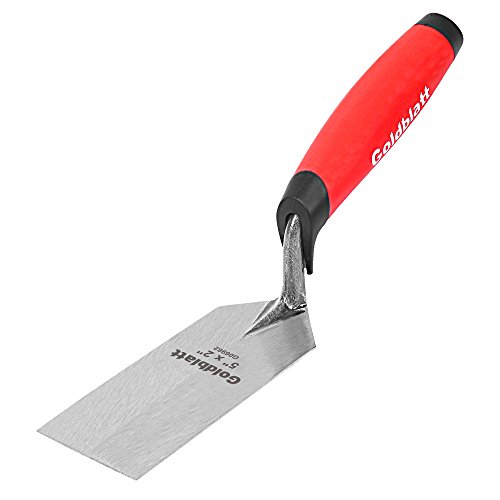
Goldblatt’s G06982 takes the same 5 x 2 inch format and pairs a high-carbon steel blade with a comfort grip handle, which makes it a comfortable budget tier option for tile work and patching. The blade is built for spreading mortar, thinset and cement into narrow joints and corners, and the soft grip gives better purchase than a bare wood handle when hands are wet or dusty.
This is a sensible choice for renovators and DIY tile setters who want a cushioned handle without moving up to premium pricing bands. The 5 x 2 inch blade suits backsplash work, floor tile edges and small masonry repairs, and the tool is light enough for overhead or vertical detail work. As with any high-carbon steel blade, rinse it clean and dry it after the job so the edge stays bright, and use the model number G06982 to identify the exact listing when you shop.
Specs
- Blade size: 5 x 2 inches
- Blade material: High-carbon steel
- Handle type: Comfort grip
- Model: G06982
- Tier: Budget
4. OX Pro Margin Trowel — Mid-Range

The OX Pro margin trowel uses a 125 x 50 mm blade — the metric expression of the standard 5 x 2 inch size — in precision-ground carbon steel. The blade is forged from one piece of carbon steel, which keeps it stiff and durable for spreading and smoothing mortar, adhesive and grout in confined areas, and the flat rectangular profile is ground for clean, controlled application along edges.
The DuraGrip soft handle is shaped with finger protection, a guard that keeps your knuckles off the work and adds security when the grip gets slick with thinset. That makes the OX Pro a good mid-range pick for tile setters who work long days and want more handle engineering than the plain wood patterns offer. OX Tools builds its Pro range for trade use, and this trowel fits that brief: simple, tough, and comfortable from the first day, with no break-in period to speak of.
Specs
- Blade size: 5 x 2 inches (125 x 50 mm)
- Blade material: Carbon steel, forged from one piece, precision ground
- Handle type: DuraGrip soft grip with finger protection
- Range: OX Pro
- Tier: Mid-range
5. Bon Tool Margin Trowel 11-838 — Mid-Range

Bon Tool’s 11-838 is a traditional margin trowel from a maker that has supplied the trowel trades for decades. The 5 x 2 inch carbon steel blade covers the standard scooping, spreading and patching duties, and the listing pairs it with an XL wood handle — a longer grip pattern that gives extra reach into deep buckets and a little more leverage when mixing stiff material in a tub.
The wood handle will suit users who prefer the balance and feel of a classic pattern over cushioned grips, and Bon’s contractor-grade build quality places this model in the mid-range tier. It is a good fit for masons who already run Bon tools, and for anyone who finds standard handles a touch short when working out of tall mixing buckets. Keep the carbon steel blade clean and dry between jobs to protect the edge.
Specs
- Blade size: 5 x 2 inches
- Blade material: Carbon steel
- Handle type: Wood, XL pattern
- Model: 11-838
- Tier: Mid-range
How to choose a margin trowel
Blade size. The 5 x 2 inch blade is the default for a reason: it fits inside buckets and mortar tubs, carries enough material to be useful, and still turns corners neatly. A 6 x 2 inch blade moves more material per pass and suits larger tile and floor work, while the narrower 5 x 1 1/2 inch patterns are for the tightest joints. All five picks here use the versatile 5 x 2 inch size, so size alone will not separate them — decide on steel and handle instead.
Blade material and construction. Forged one-piece blades, like the Marshalltown 52D and the OX Pro, put the tang and blade in a single piece of steel, which is the strongest construction and the one that develops the best working feel. High carbon and carbon steels are hard and hold an edge; they ask for basic care in return — wash off mortar before it hardens, dry the blade, and store the tool somewhere dry. A blade that is tempered and ground will flex a little under pressure and spring back, which is what you feel as quality when spreading.
Handle type. Plain wood handles are light, traditional and easy to replace in spirit — they are the budget pattern and many masons never switch. Cushioned grips such as DuraSoft and DuraGrip reduce fatigue and stay secure with wet hands, and a finger guard adds protection on soft grips. Longer handle patterns give reach into deep buckets. Handle preference is personal; if you mix and spread for hours, lean toward the cushioned options, and if the tool will mostly mix and scrape, a plain wood handle is entirely adequate.
Care. Margin trowels live a hard life in abrasive material. Rinse the blade before mortar or thinset cures on it, dry carbon steel thoroughly, and keep the edge free of nicks by avoiding use as a chisel or pry bar beyond light scraping. A well-kept forged trowel will outlast many cheaper stamped tools, which is the real argument for the premium tier.
Frequently asked questions
What is a margin trowel used for?
It is used to scoop, mix and spread mortar, thinset, grout and adhesive in tight spaces — along tile edges, in corners, under cabinets and inside joints — and to clean excess material from joints and tools as work proceeds.
What size margin trowel should I buy first?
A 5 x 2 inch blade is the best first choice because it fits in buckets, handles backsplash and floor tile work, and is small enough for detail repairs; add a 6 x 2 inch model later if you find yourself moving material over larger areas.
Is carbon steel or stainless steel better for a margin trowel?
Carbon steel and high carbon steel blades are harder, hold a crisper edge and develop a flexible feel that masons value, while stainless blades resist rust with less care; all five picks here use carbon steel family blades, so rinse and dry them after use.
How is a margin trowel different from a pointing trowel?
A margin trowel has a flat, square-nosed rectangular blade for spreading and scooping, while a pointing trowel has a smaller triangular blade shaped for filling and finishing mortar joints between bricks.
Conclusion
Every trowel in this roundup shares the proven 5 x 2 inch format, so the decision comes down to construction and grip. Choose the Marshalltown 52D if you want the forged premium tool with the most refined feel. Choose the Marshalltown 97 or the Goldblatt G06982 at the budget tier for a dependable first trowel or a hard-working spare, with the Goldblatt adding a comfort grip. The OX Pro and the Bon Tool 11-838 fill the mid-range in different ways — a guarded soft grip on one side, a longer traditional wood handle on the other. Match the handle to your hand and the steel to your workload, keep the blade clean and dry, and any of the five will serve well for tile and masonry work.