Key takeaways
- Compare the best rotary tools for cutting, grinding, carving and polishing, with published RPM ranges, collet sizes and kit contents for each pick.
- Top Pick: Dremel 4300-5/40 High Performance Rotary Tool Kit
- Runner-up: Milwaukee 2460-21 M12 Cordless Rotary Tool Kit
- Also consider: Dremel 3000-2/28 Variable Speed Rotary Tool Kit
If you only buy one rotary tool, make it the Dremel 4300-5/40. Its 1.8-amp motor, 5,000 to 35,000 RPM range and keyless three-jaw chuck cover cutting, grinding, carving, sanding and polishing without collet swaps slowing you down. On a tighter budget, the WEN 2305 kit pairs a flex shaft with an 80-piece accessory set for far less money, while Milwaukee M12 owners get the most sense from the 2460-21 kit, which runs on the batteries already in their shop. The Dremel 3000-2/28 remains the dependable mid-range corded pick, and the slim Dremel Stylo+ suits fine craft work where a full-size tool feels clumsy.
As an Amazon Associate, we earn from qualifying purchases.
Table of Contents
- Quick Comparison
- 1. Dremel 4300-5/40 High Performance Rotary Tool Kit
- 2. Milwaukee 2460-21 M12 Cordless Rotary Tool Kit
- 3. Dremel 3000-2/28 Variable Speed Rotary Tool Kit
- 4. Dremel Stylo+ 2050-15 Versatile Craft Rotary Tool
- 5. WEN 2305 Rotary Tool Kit with Flex Shaft
- How to Choose a Rotary Tool
- Frequently Asked Questions
- Conclusion
- Product and ASIN Reference
Quick Comparison
| Product | Power Source | Speed Range | Tier |
|---|---|---|---|
| Dremel 4300-5/40 | Corded, 1.8 amp | 5,000–35,000 RPM | Premium |
| Milwaukee 2460-21 M12 Kit | 12V battery | 5,000–32,000 RPM | Premium |
| Dremel 3000-2/28 | Corded, 1.2 amp | 5,000–35,000 RPM | Mid-range |
| Dremel Stylo+ 2050-15 | Corded, 0.5 amp | 5,000–22,000 RPM | Mid-range |
| WEN 2305 | Corded, 1.0 amp | 8,000–30,000 RPM | Budget |
1. Dremel 4300-5/40 High Performance Rotary Tool Kit
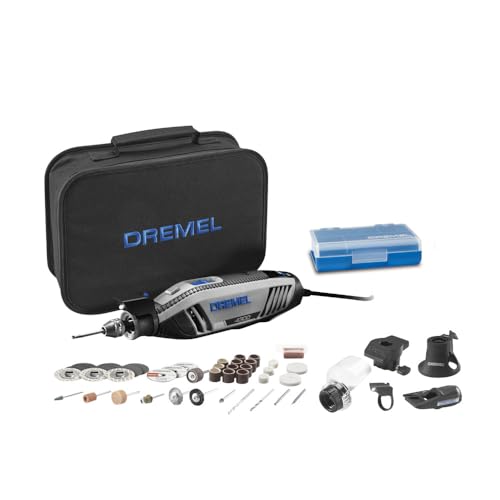
The 4300 is the strongest corded tool in the Dremel line, built around a 1.8-amp motor with variable speed from 5,000 to 35,000 RPM. That spread matters in practice: the low end suits polishing and delicate engraving, while the top end cuts through bolts, tile and hardened steel with the right wheel fitted. A universal three-jaw chuck replaces the usual collet set, so accessory changes happen with a twist of the nose instead of a wrench and a hunt through loose collets on the bench.
The 5/40 kit bundles five attachments and 40 accessories, including a pivoting LED light attachment that aims light at the cut line. Airflow through the motor housing is designed to keep the tool cooler under load, and the motor brushes are replaceable, which extends service life beyond sealed budget tools. For a home workshop that handles everything from pet nail grinding to cutting off rusted fasteners, this is the most complete single purchase in the category.
Specs
- Motor: 1.8 amp, corded 120V
- Speed range: 5,000–35,000 RPM, variable
- Chuck: universal three-jaw chuck, keyless
- Included: 5 attachments and 40 accessories, pivoting LED light attachment
- Tier: premium
2. Milwaukee 2460-21 M12 Cordless Rotary Tool Kit

Milwaukee built the 2460 for tradespeople who already carry M12 batteries. The tool runs from 5,000 to 32,000 RPM, which Milwaukee positions as faster than rival cordless rotary tools, and it uses a grinder-style exhaust port and protected front bearing aimed at longer life in dusty cutting and grinding work. The body is compact at about 9.5 inches long, so it reaches into cabinets, engine bays and ductwork where a corded tool and its cable become awkward.
The 2460-21 kit includes the tool, an M12 REDLITHIUM CP1.5 battery pack, a charger, five cutting wheels, a mandrel, a wrench and a contractor bag. It takes the industry-common 1/8-inch collet fitting, so the large accessory catalogs sold for other brands fit it as well. If your shelves already hold M12 packs, this kit adds rotary capability without a second battery platform; if they do not, the corded picks on this page deliver more kit contents for the money.
Specs
- Power source: 12V M12 REDLITHIUM battery, CP1.5 pack included
- Speed range: 5,000–32,000 RPM, variable
- Collet: 1/8 inch
- Included: battery, charger, 5 cutting wheels, mandrel, wrench, contractor bag
- Tier: premium
3. Dremel 3000-2/28 Variable Speed Rotary Tool Kit

The 3000 series has been the default first rotary tool for years, and the 2/28 kit shows why. A 1.2-amp motor drives speeds from 5,000 to 35,000 RPM, matching the flagship tool at the top end while keeping the body slimmer and lighter. The EZ Twist nose cap has an integrated wrench, so collet changes need no separate tool, and the 28 included accessories cover the common jobs: cutting, sanding, grinding, polishing and engraving bits in a storage case.
It gives up the three-jaw chuck and some motor muscle compared with the 4300, so heavy cutting sessions in thick steel will take longer and ask more patience. For routing small work, sharpening mower blades, carving wood and the hundred odd jobs that appear around a house, the published figures say it is enough tool, and the kit format means nothing else is needed on day one.
Specs
- Motor: 1.2 amp, corded 120V
- Speed range: 5,000–35,000 RPM, variable
- Collet: 1/8 inch, EZ Twist nose cap with integrated wrench
- Included: 28 accessories and storage case
- Tier: mid-range
4. Dremel Stylo+ 2050-15 Versatile Craft Rotary Tool

The Stylo+ shrinks the rotary tool into a pen-shaped body that weighs about 7.2 ounces, roughly half a full-size tool. Its 0.5-amp motor turns from 5,000 to 22,000 RPM, a range tuned for control rather than removal rate, and Dremel rates it as its quietest corded rotary tool. A slim grip and a six-foot cord let it work like a heavy pen, which suits glass etching, jewelry making, leather burnishing and fine wood carving where a bulky housing blocks the view of the line.
Fifteen accessories come in the box, including engraving cutters in 1/32-inch and 1/8-inch sizes. The trade-off is plain in the figures: with a 22,000 RPM ceiling and a light-duty motor, this is not the tool for cutting bolts or grinding welds. As a second tool for craft benches, or a first tool bought purely for detail hobbies, its shape and low noise make a case none of the larger tools can match.
Specs
- Motor: 0.5 amp, corded 120V
- Speed range: 5,000–22,000 RPM, variable
- Weight: about 7.2 ounces
- Cord length: 6 feet
- Included: 15 accessories
- Tier: mid-range
5. WEN 2305 Rotary Tool Kit with Flex Shaft
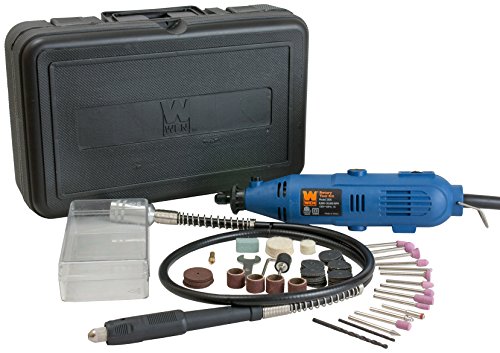
The WEN 2305 is the budget route into the category, and its kit list is longer than tools costing far more. The 1.0-amp motor runs from 8,000 to 30,000 RPM with a simple dial control, and the box holds an 80-piece accessory set plus a flex shaft. The flex shaft moves the working end onto a slim pen grip while the motor hangs or rests nearby, which helps with engraving, polishing inside small parts and other fine work where tool weight tires the hand.
It accepts both 2.3 mm and 3.2 mm collets, so it shares accessories with the common 1/8-inch shank standard used across the category. The compromises are the ones the figures suggest: a higher minimum speed makes very delicate low-speed work harder to feather, and the one-year warranty is shorter than the coverage on the Dremel kits. For occasional cutting, sanding, drilling and deburring around the home, the published kit contents are hard to argue with at this tier.
Specs
- Motor: 1.0 amp, corded 120V
- Speed range: 8,000–30,000 RPM, variable
- Collets: 2.3 mm and 3.2 mm (3/32 inch and 1/8 inch)
- Included: 80-piece accessory set, flex shaft, storage case
- Tier: budget
How to Choose a Rotary Tool
Match the speed range to your materials first. Soft plastics and polishing work need low speeds, ideally down near 5,000 RPM, because friction heat melts plastic and flings polish. Cutting steel, tile and stone lives at the top of the dial. A tool that only reaches 22,000 RPM, like the Stylo+, is a craft tool; a tool that reaches 32,000 to 35,000 RPM handles the full material range.
Decide between collets and a chuck next. Most accessories use 1/8-inch shanks, and collet tools grip them firmly, but swapping between shank sizes means swapping collets. A three-jaw chuck, as fitted to the Dremel 4300, grips any shank in its range without loose parts, which speeds up work that alternates between cutting wheels, drill bits and sanding drums.
Corded tools hold full power indefinitely and weigh less in the hand because the motor draws from the wall. Cordless tools win when the work moves around the house, the yard or a vehicle, and they make the most sense when the battery platform is already on your shelf. Finally, weigh the kit contents: attachments like flex shafts, cutting guides and lights, plus a broad accessory set, can matter more than a small difference in motor rating, because most owners buy few accessories in the first year.
Attachments deserve a separate look because they change what the tool can do. A flex shaft moves the grip away from the motor, which helps engraving and work inside tight housings. A cutting guide holds a set depth for plunge cuts in drywall and tile. A right-angle attachment reaches fasteners and edges that a straight tool body cannot approach squarely. If your projects lean toward one of those jobs, a kit that already includes the matching attachment is worth more than a longer accessory list of bits you may never fit. Accessory counts also vary widely, from the 15 pieces in the Stylo+ box to the 80 pieces in the WEN kit, so compare what is actually included rather than the headline number alone.
Frequently Asked Questions
What speed should I use for cutting metal with a rotary tool?
Use the upper part of the range. Published guidance from makers puts metal cutting near the top speeds of the tool, around 30,000 to 35,000 RPM on the corded picks here, with a reinforced cutting wheel. Lower speeds suit polishing, plastic and wood carving, where heat and control matter more than removal rate.
Can rotary tool accessories from one brand fit another brand?
Usually, yes. Most accessories use 1/8-inch shanks, and any tool with a 1/8-inch collet or a three-jaw chuck accepts them, regardless of the badge on the box. Check shank size before ordering specialty bits, since smaller craft accessories also come in 3/32-inch and 1/32-inch sizes that need the matching collet.
Is a cordless rotary tool powerful enough for cutting and grinding?
For common cutting and grinding jobs, yes. The Milwaukee 2460-21 reaches 32,000 RPM, close to corded figures, and handles cutting wheels, grinding stones and sanding work. Corded tools keep the edge in long, heavy sessions because their power never fades as a battery drains, so frequent metal cutting still favors a cord.
What is the difference between a collet and a three-jaw chuck?
A collet is a split sleeve sized for one shank diameter, tightened by a nut; it grips firmly but must be swapped when shank sizes change. A three-jaw chuck adjusts across a range of shank sizes and tightens by hand, so accessory changes are quicker. Collets are the norm on most tools, while the chuck appears on the Dremel 4300 in this roundup.
Conclusion
Pick the Dremel 4300-5/40 if you want one tool that does everything and you value fast accessory changes; its chuck, motor and kit contents justify the premium tier. Choose the Milwaukee 2460-21 when M12 batteries already live in your shop. The Dremel 3000-2/28 is the sensible middle path for general home use, the Stylo+ serves craft and detail work better than any full-size tool, and the WEN 2305 delivers the widest kit at the budget tier, flex shaft included.