Key takeaways
- Compare the best paint brushes for cutting in, trim, doors and walls, with filament blends, handle shapes and sizes explained for a clean, even finish.
- Top Pick: Purdy XL Glide Angular Paint Brush, 2.5 Inch
- Runner-up: Zibra Angled Paint Brush, 2.5 Inch
- Also consider: Wooster Shortcut Angle Sash Paintbrush, 2 Inch
If you only buy one paint brush, make it a 2.5-inch angled sash brush with a synthetic nylon and polyester filament blend. That single shape covers cutting in along ceilings, edging trim and doors, and laying off small wall sections with most latex and oil-based paints. Painters who work in tight spaces should add a short-handled 2-inch angled brush, and anyone facing a whole-house project saves time and money with a multi-size brush set.
This guide compares five brushes across the three tiers, from a budget five-piece set to premium single brushes built for a smooth finish. Each pick is judged on published specifications only: filament material, width, handle shape, ferrule construction and the paint types the maker rates it for.
As an Amazon Associate, we earn from qualifying purchases.
Table of Contents
- How to Choose a Paint Brush
- The 5 Best Paint Brushes
- Brush Care Basics
- Frequently Asked Questions
- Conclusion
- Product and ASIN Reference
How to Choose a Paint Brush
Filament comes first. Synthetic filaments, usually nylon, polyester, or a blend of the two, suit latex and water-based paints because they hold their shape in water and release paint evenly. Blends pair nylon for durability with polyester for shape retention, and flagged filament tips help a brush carry more paint and leave a smoother finish. Natural bristle, traditionally China bristle, is reserved for oil-based paints and varnishes, since water makes natural filament swell and go limp.
Width and shape decide where a brush works. A 1-inch or 1.5-inch brush handles sash bars, muntins and narrow trim. The 2-inch and 2.5-inch sizes are the workhorses for cutting in and general trim, while 3-inch and wider flat brushes move paint across siding, fences and broad flat areas. An angled sash profile puts the filament tip on a diagonal, which gives a sharper edge for cutting a line against a ceiling or a contrasting wall color. A flat, square profile lays paint over wide surfaces with fewer direction changes.
Handle and ferrule shape the feel of the brush. Long fluted or rattail handles balance well for ceiling lines and extended trim runs, while short handles and palm-style grips trade leverage for fingertip control inside cabinets and closets. The ferrule, the metal band that clamps filament to handle, should be copper, stainless steel, or another rust-resistant metal, and a thicker filament pack at the ferrule means the brush holds more paint per dip.
Stiffness is the last variable. Soft filament lays down the smoothest finish with thin paints and clear coats, and it suits detail work where brush marks must disappear. Medium-stiff filament is the all-purpose choice for modern latex paints, which are thicker than older formulas and need a firmer brush to spread without dragging. Stiff filament pushes heavy coatings, such as thick primers and exterior paints, across rough surfaces like masonry and weathered siding. Most owners are best served by one medium-stiff angled brush for walls and trim, plus a smaller soft brush only if they paint furniture or cabinets with enamel.
The 5 Best Paint Brushes
1. Purdy XL Glide Angular Paint Brush, 2.5 Inch

The Purdy XL Glide is the premium pick for painters who cut in freehand and want one durable brush for interior and exterior work. Its filament is a blend of DuPont Tynex nylon and Orel polyester with a medium-stiff rating, a combination Purdy rates for latex and oil-based paints, primers and stains. The angled profile and 5/8-inch thickness let the brush carry a solid load of paint while keeping a fine edge for trim lines.
The fluted hardwood handle gives a secure grip on long ceiling runs, and the round-edge brushed copper ferrule resists rust through repeated washings. It is a single-brush purchase aimed at owners who would rather maintain one good tool than replace worn budget brushes every season.
Specs
- Width: 2.5 inches
- Filament: DuPont Tynex nylon and Orel polyester blend
- Stiffness: Medium stiff
- Handle: Fluted hardwood
- Ferrule: Round edge, brushed copper
- Thickness: 5/8 inch
- Paint types: Latex and oil-based paints, primers and stains
- Model: 144152325
2. Zibra Angled Paint Brush, 2.5 Inch

Zibra builds this 2.5-inch angled brush around an hourglass-shaped handle that fills the palm and reduces the pinching grip a straight handle demands. The shape suits doors, trim and wall edges, where the brush changes direction often and control matters more than raw coverage.
The smooth synthetic filaments are shaped to release paint in an even flow, and the maker rates the brush for all paints and stains, so the same tool moves between latex wall paint and oil-based trim enamel with a thorough cleaning in between. It sits in the premium tier alongside the Purdy, with the choice between them coming down to handle preference: hourglass comfort grip versus a traditional fluted handle.
Specs
- Width: 2.5 inches
- Shape: Angled sash
- Filament: Smooth synthetic filament
- Handle: Hourglass-shaped ergonomic handle
- Paint types: All paints and stains
- Model: PB250PT
3. Wooster Shortcut Angle Sash Paintbrush, 2 Inch

The Wooster Shortcut shrinks the handle to a short, flexible Shergrip that sits deep in the palm, putting the painter’s fingers close to the cutting edge. In closets, stairwells and cabinet interiors, where a full-length handle knocks against walls and ceilings, that stubby grip is a genuine advantage, and the 2-inch head still covers trim at a reasonable pace.
The filament is a white nylon and gold polyester blend rated for all paints and water-based stains, held in a stainless steel ferrule. It is a mid-range single brush that many owners keep as a dedicated cut-in tool next to a larger brush for open areas. The trade-off is paint capacity: the smaller head needs more frequent trips back to the can than a 2.5-inch brush.
Specs
- Width: 2 inches
- Shape: Angle sash
- Filament: White nylon and gold polyester blend
- Handle: Short, flexible Shergrip
- Ferrule: Stainless steel
- Paint types: All paints and water-based stains
- Model: Q3211-2
4. Zibra Palm Pro Angled Paint Brush, 2 Inch

The Palm Pro takes the short-handle idea further, with a patented palm-style grip shaped to rest against the hand like an extension of it. The 2-inch angled head suits baseboards, window trim and furniture, and the compact form helps on long trim runs where a conventional handle can tire the wrist.
Zibra packs this head with twenty-five percent more filaments than a standard brush of the same size, and denser pack-out means more paint per load and a smoother release along the line. The maker rates it for all paints and stains. It is a mid-range pick for owners who do a lot of trim and cabinet work and want control without giving up coverage.
Specs
- Width: 2 inches
- Shape: Angled
- Filament: Synthetic, with twenty-five percent more pack-out than standard brushes
- Handle: Patented Palm Pro short palm-style grip
- Paint types: All paints and stains
- Model: PLM200LT
5. Pro Grade Paint Brush Set, 5 Pieces
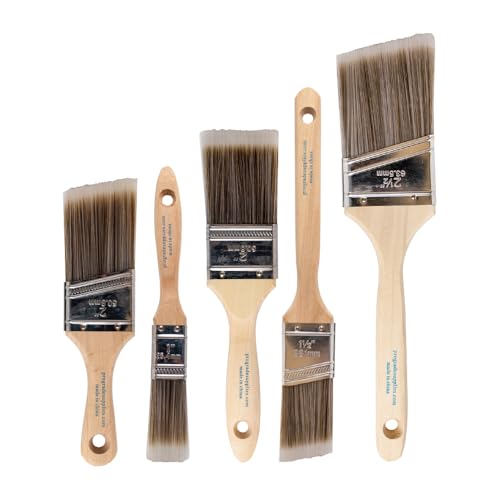
The Pro Grade set is the budget option, and it solves the sizing problem in one purchase. The five brushes cover a 1-inch flat, a 1.5-inch angle, a 2-inch stubby angle, a 2-inch flat and a 2.5-inch angle, which is the full range most home projects call for, from sash detail to broad trim.
The SRT synthetic filaments work with latex and oil paints and stains, indoors and out, and the softwood handles keep the set light. A set like this also means a clean brush is always ready when colors change mid-project. Filament finishing is a step below the premium single brushes, so expect this set to serve home projects well rather than anchor a professional kit.
Specs
- Pieces: 5
- Sizes: 1 inch flat, 1.5 inch angle, 2 inch stubby angle, 2 inch flat, 2.5 inch angle
- Filament: SRT synthetic filaments
- Handle: Softwood
- Paint types: Latex and oil paints, stains
- Use: Interior and exterior
Brush Care Basics
Cleaning decides how long a brush lasts. Latex paint rinses out with warm water and a little soap, worked through the filament with a brush comb until the water runs clear. Oil-based paint needs the solvent named on the paint can, followed by a soap and water wash. Spin or shake out excess moisture, then reshape the filament by hand.
Store brushes dry, flat or hanging by the handle hole, ideally in the cardboard keeper the brush shipped in. A keeper holds the filament in its molded shape and protects the edge from bending in a toolbox. Never leave a brush standing on its filament tips in a jar of water or solvent, since a bent set in the filament is difficult to remove and ruins the cutting edge.
During a long project, a brush does not need a full wash at every break. For a pause of a few hours, load the filament with paint, wrap the head tightly in plastic wrap or foil, and keep it out of heat and direct sun. For an overnight pause with latex paint, the wrapped brush can go in a refrigerator, then come back to room temperature before use. Dried paint at the heel, the part of the filament nearest the ferrule, is the most common cause of a brush losing its fine edge, so rinse the heel thoroughly at every full cleaning and work the comb from the ferrule toward the tip.
Frequently Asked Questions
What size paint brush is best for cutting in along ceilings and trim?
A 2-inch or 2.5-inch angled sash brush is the most useful size for cutting in. The angled profile gives a sharp edge for the line, and the width carries enough paint to run a long section before reloading. For narrow window sash and muntins, drop to a 1-inch or 1.5-inch brush.
Are synthetic filaments better than natural bristle for latex paint?
Yes. Latex and other water-based paints need synthetic filament, because nylon and polyester hold their shape in water and spring back after each stroke. Natural bristle absorbs water, swells and turns limp in latex paint, so it is reserved for oil-based paints, varnishes and shellac.
What is the difference between an angled sash brush and a flat brush?
An angled sash brush has its filament cut on a diagonal, which produces a finer, more controllable edge for cutting lines along ceilings, trim and corners. A flat brush has a square-cut tip that lays paint evenly over broad, open surfaces such as siding, fences and doors, where edge precision matters less than coverage.
How should paint brushes be cleaned and stored so the filaments keep their shape?
Rinse latex paint out with warm water and soap, combing the filament until the water runs clear, and use the solvent named on the can for oil-based paint before a final wash. Dry the brush, reshape the filament by hand, and store it flat or hanging inside its cardboard keeper so the edge keeps its molded shape.
Conclusion
For most owners, the Purdy XL Glide in 2.5-inch form is the single best paint brush to own: a durable nylon and polyester blend, a balanced fluted handle and a copper ferrule that survives years of washing. The two Zibra brushes answer the comfort question with shaped grips, the Wooster Shortcut owns tight spaces, and the Pro Grade set covers every common size on a budget. Match the filament to the paint, pick the width for the surface, and clean the brush properly after every job.