Key takeaways
- Compare five soldering stations by wattage, temperature range, tip system and included extras to pick the right bench iron for electronics work.
- Top Pick: Hakko FX888D Digital Soldering Station
- Runner-up: Weller WE1010NA Digital Soldering Station
- Also consider: YIHUA 862BD+ 2 in 1 Soldering and Hot Air Rework Station
If you want one answer up front, here it is: most home electronics benches are best served by a temperature controlled station in the 60 to 75 watt range, and the Hakko FX888D and Weller WE1010NA are the two safest long term picks in that class. Both hold a set temperature instead of guessing at heat with a power dial, both use widely stocked replacement tips, and both come from makers with long parts support. If your budget is tighter, the Weller WLC100 covers light board work for far less commitment, the X-Tronic 3020-XTS bundles the accessories a new bench usually lacks, and the YIHUA 862BD+ adds a hot air wand for surface mount rework in the same footprint as a plain station. The five picks below are grouped by tier, with published specifications only, so you can match wattage, temperature range and tip system to the work you actually do.
As an Amazon Associate, we earn from qualifying purchases.
Table of Contents
- How to Choose a Soldering Iron or Station
- Hakko FX888D Digital Soldering Station
- Weller WE1010NA Digital Soldering Station
- YIHUA 862BD+ 2 in 1 Soldering and Hot Air Rework Station
- X-Tronic 3020-XTS 75W Soldering Iron Station
- Weller WLC100 40W Soldering Station
- Frequently Asked Questions
- Conclusion
- Product and ASIN Reference
How to Choose a Soldering Iron or Station
Wattage is the first figure to read, but it does not mean raw heat in the way many buyers assume. A higher wattage element recovers temperature faster after a joint pulls heat out of the tip, so a 70 watt station can hold 350 degrees on a ground plane where a 30 watt pencil iron sags and forces you to linger on the pad. For through hole boards, connectors and general wiring, 40 to 75 watts is the useful band. Below that, large terminals and chassis grounds become slow work. Above that, you gain recovery speed you will rarely use on small boards.
Temperature control matters more than the number on the box. A station with a sensor in the iron and a set point you dial in will hold the tip within a narrow band, which protects pads and plastic connector housings. A basic power dial station, like the budget pick below, varies output without reading tip temperature at all, so the tip runs hotter at idle and cooler under load. That is acceptable for occasional repairs and stained glass work, but a closed loop station is the better tool for daily board work.
Tip system is the third check. Every iron here uses replaceable tips, and the cost of ownership sits in how easy those tips are to find in five years. Hakko T18 tips and Weller ET tips are stocked by electronics distributors worldwide. YIHUA and X-Tronic use the common 900M series pattern, which is also easy to source. A fine conical tip suits small pads, a 1.6 mm chisel covers most through hole joints, and a wider chisel or knife tip moves heat into larger terminals. Buying a station whose tips you can replace one at a time beats a sealed handpiece every time.
Finally, look at what the box includes and what sits around the iron. A stable holder, a brass wool cleaner or sponge, and a solder spool holder sound minor until you are mid repair with one hand on the board. Two in one stations add a hot air wand for surface mount removal, which is worth having if you rework phones, laptops or modern boards with small packages, and unnecessary weight and cost if you only solder through hole parts and wire.
Hakko FX888D Digital Soldering Station

The FX888D is the station many benches settle on for a decade, and the published figures explain why. The ceramic heating element is rated at 70 watts, the set range runs from 200 to 480 degrees Celsius, and temperature is adjusted with push buttons beside a digital readout, with two preset temperatures that can be stored and recalled. The FX-8801 handpiece is light, the cord is flexible, and the station drives the iron at 26 volts, which keeps the handle end of the setup low voltage. Hakko lists the station as ESD safe, which matters when you work on boards with sensitive components.
Tip support is the strongest argument here. The FX888D uses the T18 series, one of the most widely distributed tip lines in electronics, available in conical, chisel, bevel and knife shapes from many sellers. The included FH200 holder carries both a cleaning sponge and a cleaning wire, so you can wipe oxides on the wire without thermally shocking the tip in a wet sponge. For a home or small shop bench that solders every week, this is the premium tier pick that asks the fewest compromises.
Specs
– Power: 70 W
– Temperature range: 200 to 480 degrees C (392 to 896 degrees F)
– Control: digital push button with temperature display, two storable presets
– Output to iron: 26 V
– Tip series: Hakko T18
– Iron: FX-8801 handpiece
– Holder: FH200 with cleaning sponge and cleaning wire
– ESD safe: yes
Weller WE1010NA Digital Soldering Station
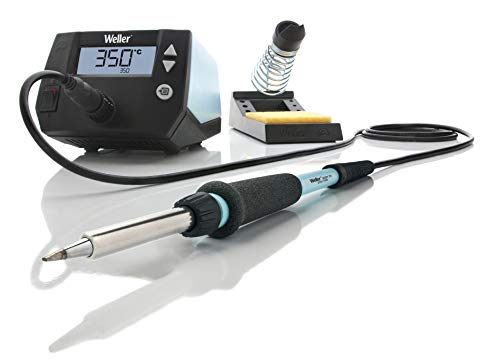
Weller’s WE1010NA is the direct rival to the Hakko, built around a 70 watt output and a temperature range of 200 to 850 degrees Fahrenheit. The front panel uses an LCD screen with menu buttons rather than a simple up and down pad, and the station adds a standby mode that drops tip temperature when the iron sits idle, plus a password lock that keeps settings from drifting in shared spaces like classrooms and repair shops. Weller rates the station as ESD safe and backs it with a one year warranty, per the listing data.
The WE1010NA uses Weller ET series tips, another line with deep distributor stock, and the WEP 70 handpiece has a slim grip that suits long sessions of small work. The safety rest is a separate wire holder with a sponge tray, so the bench layout stays flexible. Choose this one over the Hakko if you prefer the LCD menu layout and the standby function, or if your other bench tools already run on Weller tips. It sits in the same premium tier and serves the same through hole and light surface mount workload.
Specs
– Power: 70 W
– Temperature range: 200 to 850 degrees F (93 to 454 degrees C)
– Control: digital with LCD screen and menu buttons
– Features: standby mode, password protected settings
– Tip series: Weller ET
– Iron: WEP 70 handpiece
– Dimensions: 5.91 x 8.86 x 12.4 inches
– ESD safe: yes
– Warranty: 1 year
YIHUA 862BD+ 2 in 1 Soldering and Hot Air Rework Station
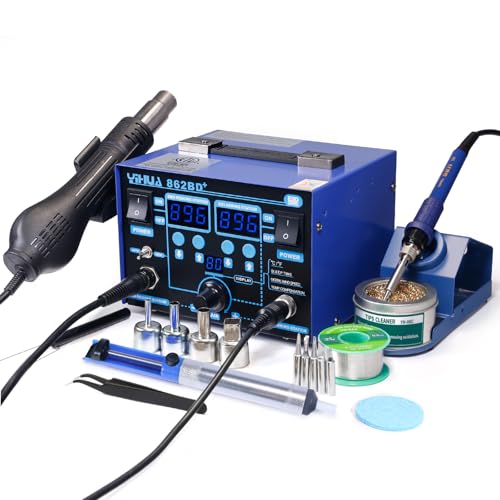
The 862BD+ folds two tools into one housing: a 75 watt soldering iron and a hot air rework wand for surface mount removal and reflow. The iron covers 200 to 480 degrees Celsius and the hot air side covers 100 to 480 degrees Celsius with airflow up to 120 litres per minute, and each side has its own digital display so both set points stay visible while you work. YIHUA lists the station as ESD safe and ETL certified, and the box includes five soldering tips and four hot air nozzles, which covers the common SOIC, QFP and PLCC package sizes named in the listing.
This is the mid-range pick for anyone whose work has moved past through hole boards. Hot air is the practical way to lift multi pin surface mount parts without cooking pads, and pairing it with the iron in one unit saves bench space over two separate stations. The iron uses the widely copied 900M tip pattern, so replacement tips are inexpensive and easy to find. If you never touch surface mount parts, the plainer stations above and below are simpler buys, but as an all in one rework seat the 862BD+ is hard to match at its tier.
Specs
– Type: 2 in 1 soldering station and hot air rework station
– Soldering power: 75 W
– Soldering temperature range: 200 to 480 degrees C
– Hot air temperature range: 100 to 480 degrees C
– Airflow: up to 120 L/min
– Displays: separate digital display for each side
– Included: 5 soldering tips, 4 hot air nozzles
– ESD safe: yes
– Certification: ETL listed
X-Tronic 3020-XTS 75W Soldering Iron Station
The 3020-XTS is sold as a complete bench kit rather than a bare station. The unit is rated at 75 watts total, with 60 watts driving the iron, and the temperature range runs from 392 to 896 degrees Fahrenheit with an LED readout and a toggle between Fahrenheit and Celsius. A ten minute sleep feature drops the tip temperature when the iron sits unused, which extends tip life and cuts idle heat on the bench. X-Tronic is a United States based brand and lists a three year warranty for the station in its manual.
The accessory bundle is the reason to pick it. The box includes two helping hands mounted at the station, a side solder roll holder with a 50 gram roll of lead free solder, a brass sponge with cleaning flux, and a wet sponge, so a new bench needs little else on day one. The iron uses the common 900M style tips and five extra tips are included in the kit version of the listing family. For a first station or a second seat in a busy shop, this mid-range kit trades the brand depth of Hakko and Weller for a fuller box and a longer stated warranty.
Specs
– Power: 75 W total (60 W iron)
– Temperature range: 392 to 896 degrees F (200 to 480 degrees C)
– Control: digital with LED display, Fahrenheit and Celsius toggle
– Sleep feature: 10 minute automatic sleep
– Included: 2 helping hands, solder roll holder with 50 g lead free solder roll, brass sponge with cleaning flux, wet sponge
– Tip style: 900M series
– Warranty: 3 years
Weller WLC100 40W Soldering Station
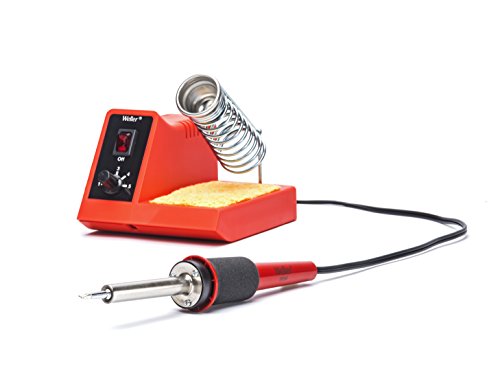
The WLC100 is the budget tier entry and the simplest tool in this group. Instead of a temperature sensor and set point, it uses a variable power dial that adjusts output from 5 to 40 watts, feeding a lightweight pencil iron with a cushioned foam grip. The supplied ST3 tip is an iron plated copper screwdriver shape at one eighth of an inch wide, a good general shape for larger joints, wiring and stained glass seams. An on and off switch with an indicator light, a separate iron holder and a sponge tray round out a station that has stayed in Weller’s catalogue for many years.
Know the trade before you buy. With no closed loop control, the tip temperature follows the load, so fine board work takes more care and the tip runs hotter than needed at idle on high settings. For occasional repairs, hobby kits, automotive wiring and craft work, that trade is reasonable, and the low commitment leaves room in the budget for solder, flux and a multimeter. If you later move to weekly board work, the stations above are the natural upgrade path, and the WLC100 still earns a place as a loaner or a glue gun style grab and go iron for big joints.
Specs
– Power: adjustable 5 to 40 W
– Control: variable power dial (no temperature readout)
– Tip: ST3 iron plated copper screwdriver tip, 1/8 inch
– Iron: lightweight pencil iron with cushioned foam grip
– Includes: iron holder, sponge tray, on/off switch with indicator light
– Voltage: 120 V
Frequently Asked Questions
What wattage do I need for circuit board work?
For through hole boards and connectors, a station in the 60 to 75 watt range is the comfortable choice, because the element restores tip temperature quickly after each joint. Smaller 40 watt stations handle light boards and wiring, but they slow down on ground planes and large terminals.
Is a soldering station better than a standalone iron?
For regular work, yes. A station holds a set temperature with a sensor in the handpiece, which protects pads and gives repeatable joints, while a basic standalone iron or power dial station drifts with load. A standalone iron still suits rare, simple repairs where setup time matters more than control.
Which tip shape suits most electronics jobs?
A small chisel tip around 1.6 mm wide covers the widest range, since the flat face transfers heat well and the edge reaches into tighter spots. A fine conical tip helps on small pads, and a wider chisel or knife shape suits large terminals and drag work across rows of pins.
Do I need hot air rework for surface mount parts?
If you remove or replace multi pin surface mount components, hot air is the practical method, because it heats every pin at once and lifts the part without prying. If your work is through hole parts and wire only, a plain soldering station covers it and the hot air wand would sit unused.
Conclusion
Match the station to the work and the choice makes itself. Weekly board work with a long horizon points to the Hakko FX888D or the Weller WE1010NA, two premium stations with deep tip support and closed loop control. Surface mount rework in the mix points to the YIHUA 862BD+, which pairs a 75 watt iron with a proper hot air wand. A first bench or a spare seat is well served by the X-Tronic 3020-XTS kit and its long accessory list, while the Weller WLC100 keeps the budget tier honest for occasional repairs and heavier joints. Whichever tier you land in, confirm the tip series is one you can reorder easily, since tips are the part you will replace most over the life of the tool.