Key takeaways
- Ask a seven-year-old how long ten minutes is, and the answer is often a shrug. Time is abstract for children, which is why morning routines turn into…
Ask a seven-year-old how long ten minutes is, and the answer is often a shrug. Time is abstract for children, which is why morning routines turn into battles and homework drags on. A clock built for kids makes time visible: a shrinking red disk, a clear analog face with labeled numbers, or a light that tells a child when it is acceptable to leave the bed. Those cues replace nagging with something the child can see.
This guide covers visual timers, teaching clocks, and a wake-up clock. Only product names are used as facts, so the buying rules below focus on what to look for: display style, readability, sound, and whether the tool teaches clock reading or tracks time spans. Matching the tool to the goal is the key decision, and a few minutes spent deciding what you want the clock to do will save you from buying the wrong one. Think of a timer as a coach and a clock as a teacher.
Quick Picks
| Product | Best for | Worth knowing |
|---|---|---|
| Time Timer Original | Homework and chore countdowns | Visual timer, not a teaching clock |
| Time Timer MOD | Kids who like a compact timer | Different line from the Original, so compare formats |
| Learning Resources Time Tracker | Classroom or home visual timer use | Name points to tracking elapsed time |
| Learning Resources Big Time Learning Clock | Children learning to read an analog clock | Learning clock, so it focuses on telling time |
| Mirari OK to Wake! Alarm Clock | Young kids who wake too early | Alarm clock built around a wake-up signal |
How to Choose
Pick the right type for the goal
A visual countdown timer teaches how long a task lasts, a learning clock teaches reading hours and minutes, and a wake-up clock sets sleep boundaries. A good rule of thumb is to start with one clear goal and buy a tool for that goal, since an all-purpose gadget often does none of them well. Many families end up with two: a timer and a teaching clock. Children who struggle with transitions benefit most from the timer, while children who ask what time it is all day are ready for a learning clock.
Prefer clear, uncluttered faces
For learning to read time, choose a clock with large numerals, a distinct hour hand and minute hand, and ideally color coding between them. For timers, a bold colored disk that shrinks as time passes is easier for young kids than numbers alone. Avoid clocks crowded with decoration, which make the face harder to read from a distance. If the child will use it across a room, aim for a face at least six inches across, and look for a clean contrast between the numbers and the background.
Check the sound and alert options
A gentle chime is better than a harsh buzzer for focused tasks, and a volume control or a silent mode helps in shared spaces or classrooms. If the timer will be used at bedtime, look for a model that does not click audibly. Adjustable alerts matter since some children are startled by sudden noise and others ignore quiet ones. Test the alert once at home before handing it to a child, since a timer that surprises a sensitive child can create the opposite of calm focus.
Consider power and durability
Battery-powered clocks travel easily from desk to kitchen, while plug-in models never die in the middle of a school morning. Look for a sturdy case and a stable base, since children drop things. Check whether replacement batteries are standard types you can buy anywhere, and how easy the battery door is to secure from small fingers. A screw-closed battery compartment is a safety feature worth looking for in anything a young child will carry around.
Our Picks Reviewed
Time Timer Original

Time Timer Original 8" Visual Countdown Timer – Medium 60-Minute Silent Classroom Visual Timer for SEL, Emotional Regulation, Focus, Calm Transitions, ADHD, Autism – (Blue & White)


As an Amazon Associate we earn from qualifying purchases. Product prices and availability are accurate as of the date/time indicated.
Time Timer built its name around a visual countdown that shows the remaining minutes as a colored section. The Original is the model that introduced the concept to many classrooms and homes.
- Pro: a visual countdown makes the passing of time concrete for children who cannot yet estimate minutes.
- Pro: using a timer for homework, chores, and screen limits reduces arguments because the clock enforces the end rather than a parent.
- Con: a timer teaches duration, not clock reading, so it will not replace a learning clock for time-telling practice.
Skip it if your goal is to teach analog clock reading or if you need an alarm clock for bedtime routines. Check the model details in the manual to confirm the maximum time span suits your tasks. Introduce it with a trial run, such as a five-minute tidy-up, so the child learns that the timer is a helper and not a punishment.
Time Timer MOD

TIME TIMER Home MOD – 60-Minute Visual Timer Home Edition, Silent Operation Study Tool for Kids Desk, Homeschool Supplies, Office & Meetings (Lake Day Blue)


As an Amazon Associate we earn from qualifying purchases. Product prices and availability are accurate as of the date/time indicated.
The MOD name signals a different line from the Original, from the same brand. It comes from a family built around visual timers for focus and routines.
- Pro: a timer in the same family can offer the same visual idea in a form that may fit more small spaces.
- Pro: visual timers help with transitions, such as moving from play to dinner, which are common flashpoints in families.
- Con: with two lines from the same brand, it is easy to confuse features, so verify the format and display style on the listing.
Skip it if you want a clock that teaches reading hours and minutes, or if you prefer a purely analog design with no electronics. Families who already own the Original may not need a second timer. Try a few different tasks with it in the first week, because the best use, whether homework, brushing teeth, or chores, often surprises parents.
Learning Resources Time Tracker
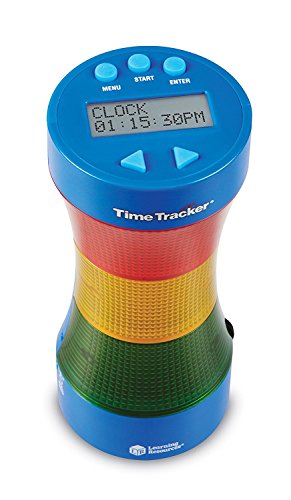
Learning Resources Time Tracker 2.0 Classroom Timer | Countdown Visual Timer for Kids, Visual Timers for Classroom Management, Light Up Kids Timers, Time Management Clock


As an Amazon Associate we earn from qualifying purchases. Product prices and availability are accurate as of the date/time indicated.
Learning Resources makes classroom tools, and the Time Tracker name suggests a way to track time visually, which suits teachers and parents who want to show elapsed time.
- Pro: an educational-brand timer is generally designed with classrooms in mind, so it tends to be clear and easy to read from across a room.
- Pro: tracking elapsed time helps children see how long activities really take, which supports planning.
- Con: the name alone does not describe the display or sound options, so check what alerts it offers.
Skip it if you need a bedtime clock with a nightlight feature, or if the child is learning to read analog hands. Look at the specifications to see how it compares with a standard visual timer. Place it where the child can see it without turning around, since a timer behind the shoulder is easy to ignore.
Learning Resources Big Time Learning Clock

Learning Resources Big Time Student Clock | Classroom Clock, Telling Time for Kids, Clocks for Classroom, Kids Learning Clocks, School Math Teaching Toy, Teaching Toy


As an Amazon Associate we earn from qualifying purchases. Product prices and availability are accurate as of the date/time indicated.
The Big Time Learning Clock label tells you the main purpose: teaching a child to tell time. The brand is known for teacher-friendly educational products.
- Pro: a learning clock is built to teach hour and minute hands, which helps a child understand how the face relates to the day.
- Pro: a big face is easier to read, which keeps beginners from getting lost in small print.
- Con: it teaches reading time, not managing it, so you may still need a timer for tasks.
Skip it if your child already reads analog clocks fluently, or if you need a tool with a countdown. Pair it with a timer for the best results. Keep it at a desk or in a spot near a wall clock so the child can compare the learning face to the real one in the room.
Mirari OK to Wake! Alarm Clock

LEFXMOPHY 4FT Cord for Mirari OK to Wake Alarm Clock & Night Light USB Power Cable

As an Amazon Associate we earn from qualifying purchases. Product prices and availability are accurate as of the date/time indicated.
The OK to Wake! name describes the concept: a clock that tells a child when it is okay to leave the bedroom, helping manage early risers.
- Pro: a clear wake signal gives young children a visual rule, which can protect parents’ sleep and teach respect for routines.
- Pro: bedroom clocks that use simple signals are usually easy for non-readers to understand.
- Con: it solves a sleep-schedule problem, not a task-timing one, so it will not teach clock reading by itself.
Skip it if you need a classroom timer or a teaching clock, or if your child sleeps through alarms and needs a stronger alert. Check the manual for setup details before the first night. Pick a simple rule, such as the child stays in bed until the signal changes, and repeat it for a week so the habit takes hold.
Which One Fits
- Homework and chore countdowns: the Time Timer Original or MOD, which are built around the shrinking-time idea.
- Classroom or shared-space tracking: the Learning Resources Time Tracker.
- Kids learning to read an analog clock: the Learning Resources Big Time Learning Clock.
- Early risers and bedtime routines: the Mirari OK to Wake! clock, which is designed around a wake-up signal for the bedroom.
- Projects such as baking with kids are a good way to practice timers in real life.
Common Mistakes
- Buying a clock for one goal and expecting it to meet another, such as using a timer to teach clock reading.
- Choosing a cluttered face that makes the numbers hard to read.
- Setting timers that are too long for a young child, who loses the sense of urgency and stops watching the display.
- Using the clock as a punishment instead of a neutral signal.
- Forgetting spare batteries, which leaves the routine without a cue on a school morning and can derail the whole habit.
FAQ
At what age should kids learn to read a clock?
Many children begin to read hours around age six or seven and minutes a year or two later. Start with the hour hand and build from there, practicing with a wall clock in the kitchen during everyday routines.
Do visual timers really help?
For many children, yes. Seeing the remaining time shrink makes it easier to accept a transition than hearing a parent call time.
Should I use a digital or analog clock?
Analog clocks teach the concept of time passing, while digital are easier for quick reading. Many families use both, often an analog learning clock for lessons and a digital display for the wake-up routine.
How long should a timer be set for?
Match the length to the child’s age: five to ten minutes for young children and fifteen to thirty for older ones.
What activities pair well with a timer?
Puzzles, cleanup games, and reading. See ideas for jigsaw puzzles for kids that work well in timed sessions.