
Key takeaways
- For most people upgrading an existing DDR4 system, a 16GB or 32GB dual-channel 3200 MHz CL16 kit such as the Corsair Vengeance LPX or G.Skill Ripjaws V is…
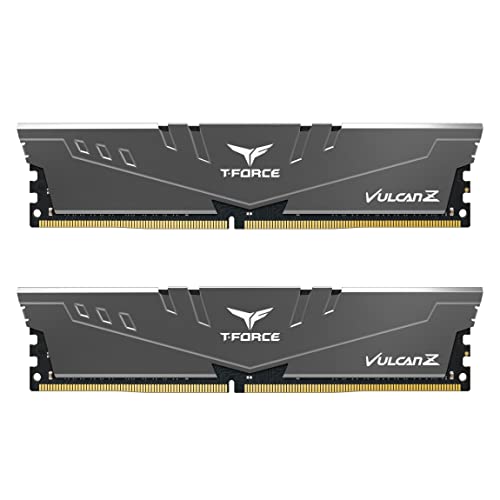
For most people upgrading an existing DDR4 system, a 16GB or 32GB dual-channel 3200 MHz CL16 kit such as the Corsair Vengeance LPX or G.Skill Ripjaws V is the safest choice, while Ryzen 5000 owners who want a little more bandwidth can step up to a 3600 MHz CL18 kit. Builders who want a plain, lighting-free look can consider the TeamGroup T-Force Vulcan Z, and anyone with a tall CPU cooler should prefer a low-profile module. DDR4 is a legacy standard in 2026, so the question is less “which kit is fastest” and more “which kit fits my board, my cooler and my budget without wasting money on speed the platform cannot use.”
Our top picks


As an Amazon Associate we earn from qualifying purchases at no extra cost to you.
Is DDR4 still worth buying in 2026?
Current desktop platforms from both AMD and Intel are built around DDR5, so DDR4 only makes sense if you already own a compatible board. That means AM4 boards (Ryzen 3000 and 5000 series, plus a few older APUs) or Intel boards with DDR4 slots, typically 10th to 14th generation Core systems on the right chipset. Reviewers who cover budget builds point out that moving a working DDR4 machine to 32GB is usually far cheaper than replacing the motherboard and CPU just to reach DDR5. Several outlets also mention that memory street prices have been unusually volatile, which is why the 100-dollar ceiling in this guide may cover a 32GB kit at some times and only a 16GB kit at others. Treat the tiers below as a planning tool, and compare the current offer of any kit against its stated specs rather than its name alone.
At a glance: DDR4 kits that suit most builds
| Kit | Best for | Key stated specs | Limits |
|---|---|---|---|
| Corsair Vengeance LPX DDR4 | Most upgrades, small cases, big air coolers | Low-profile heat spreader; common 3200 MHz CL16 configurations; the maker lists 1.35V on its XMP kits | Plain looks, no lighting; some listings are single-sided or dual-sided depending on capacity |
| G.Skill Ripjaws V DDR4 | Gaming builds on AM4 or Intel DDR4 boards | Sold in many speeds from 3200 to 3600 MHz and above; XMP profiles; 1.35V on common bins | Taller heat spreader than LPX, check cooler clearance |
| TeamGroup T-Force Vulcan Z DDR4 | Plain, lighting-free systems | The maker lists 3200 MHz CL16 kits at 1.35V with XMP 2.0; aluminum heat spreader, no LEDs on the gray version | Fewer speed options; 32GB kits use looser timings than 16GB kits |
| Kingston Fury Beast DDR4 | Plug-and-play XMP kits with broad availability | 3200 to 3600 MHz kits; automatic overclock detection on supported platforms per the maker | Heat spreader height is moderate, so check large coolers |
| Patriot Viper Steel DDR4 | Higher-speed kits for Ryzen tuning | Marketed in a range of higher-speed kits with aluminum heat spreaders | Faster bins offer little in real games and may need manual tuning |
How to choose: the specs that matter
Capacity first
For gaming and general use, 16GB is the workable minimum and 32GB is the comfortable target if you multitask, stream, edit video or play recent open-world titles. Reviewers repeatedly note that moving from 16GB to 32GB can help avoid stutter in memory-hungry games and browser-heavy sessions, while moving from 3200 to 3600 MHz changes frame rates by only a small amount. If your budget forces a choice, capacity beats speed.
Speed and latency
Most roundups call 3200 MHz CL16 the DDR4 sweet spot, because it balances cost and latency and works on both AMD and Intel boards. A 3600 MHz CL18 kit trades slightly looser timings for more bandwidth and is a frequent pairing with Ryzen 5000 processors, whose internal fabric clock commonly runs at a 1:1 ratio around that speed. On Intel DDR4 boards, kits faster than the platform’s rated memory speed may need XMP, and some entry-level chipsets limit memory overclocking, so read the board manual before paying for a faster bin.
Voltage and profiles
The JEDEC standard for DDR4 is 1.2V. Most enthusiast kits use 1.35V XMP profiles to hit their rated speeds. On AMD boards the equivalent profile is often called DOCP or EXPO-compatible XMP, and you must enable it in the BIOS, otherwise the kit runs at a slower default speed such as 2133 or 2666 MHz. If you see lower-than-advertised speed in the operating system, an inactive profile is the first thing to check.
Two modules beat one
A 2x8GB or 2x16GB kit runs in dual-channel mode, which gives measurably more bandwidth than a single stick of the same total capacity. Buy memory as a matched kit, not as separate sticks, because mixing brands or speeds can lead to instability or force the system to run at the slowest module’s settings.
Height and clearance
Low-profile modules such as the Vengeance LPX sit lower than tall designs with RGB light bars or thick heat spreaders. Large tower coolers can overhang the first memory slot, so look at the cooler maker’s stated memory clearance. If you plan to install a dual-tower air cooler, the LPX style or a similar low-profile kit avoids fan-height compromises.
Budget tiers
Entry tier: 16GB, 3200 MHz
This tier suits office PCs, esports titles and older systems that currently run 8GB. A 2x8GB 3200 MHz CL16 kit from Corsair, G.Skill, Kingston or TeamGroup covers it. Reviewers describe these kits as the best value because the performance gap to faster kits is small, even on Ryzen. Choose this tier if you want a simple, safe upgrade.
Mid tier: 32GB, 3200 or 3600 MHz
This is where most gamers and creators end up. A 2x16GB kit leaves headroom for modern games, streaming software and a browser with many tabs. The 3600 MHz CL18 option is attractive on Ryzen 5000, while 3200 MHz CL16 remains the universal choice. Check capacity per module on your motherboard’s memory support list, since older boards sometimes need a BIOS update to recognize 16GB modules.
Premium tier: faster or lower-latency kits
Kits at 3600 MHz CL16, 3800 MHz and above suit enthusiasts who enjoy tuning. The gains are real in some benchmarks but modest in games, and those kits are more sensitive to the memory controller on the CPU. When the 100-dollar cap is tight, this tier is usually the first thing to drop.
Compatibility and installation notes
- Match the generation. DDR4 and DDR5 modules have different notch positions and are not interchangeable. A DDR4 kit will not fit in a DDR5 slot.
- Check the QVL. Motherboard makers publish a qualified vendor list of tested memory kits. A kit that is not listed can still work, but a listed kit removes guesswork.
- Use the right slots. On a four-slot board, install two modules in the slots the manual names, usually the second and fourth slots from the CPU, to get dual-channel operation.
- Power off first. Shut down, switch off the power supply and unplug the cable before opening the case. Touch bare metal on the chassis to discharge static before handling modules, and hold them by the edges.
- Update the BIOS if needed. If the system does not post with a new kit, reseat the modules and follow the board manual for a BIOS update or memory-training reset procedure.
Pick X if you need Y
| If you need | Pick | Why |
|---|---|---|
| A safe, small-footprint upgrade for a mixed build | Corsair Vengeance LPX 3200 CL16 | Low profile, broad compatibility, widely recommended by roundup sites |
| Gaming on Ryzen 5000 | G.Skill Ripjaws V 3600 CL18 | Frequently named as a reference AM4 pairing |
| A no-frills, lighting-free system | TeamGroup T-Force Vulcan Z DDR4 3200 | CL16 at 1.35V and understated styling |
| Simple XMP setup on Intel DDR4 | Kingston Fury Beast DDR4 | Plug-and-play positioning and broad kit range |
| Tuning potential | Patriot Viper Steel at higher speeds | Wider speed range, but expect manual tweaks |
| Lowest cost to reach 16GB | Any 2x8GB 3200 CL16 kit | Capacity matters more than speed at this level |
Alternatives to consider
- Look at a platform upgrade. If you are buying a CPU and motherboard anyway, DDR5 is the current standard and has a longer upgrade path, although DDR5 kits usually cost more per gigabyte.
- Buy used with care. Used DDR4 is common and can be a good way to reach 32GB. Look for matched kits with clear labels, avoid sticks with visible damage, and run a memory test after installation.
- Single-rank vs dual-rank. Some reviewers note that 16GB modules built with more memory chips can behave differently on Ryzen. If stability matters, buy a kit that appears on your board’s support list.
Common mistakes to avoid
The most frequent mistake is forgetting to enable XMP or DOCP, which leaves the kit at a slow default. The second is buying a tall kit that collides with a cooler. The third is paying for a speed grade the processor cannot use. Finally, avoid mixing an old kit with a new one to reach a higher capacity unless you accept that the pair will run at the slowest module’s settings.
Frequently Asked Questions
Is 3200 MHz or 3600 MHz DDR4 better for gaming?
The gap is small in most games. A 3600 MHz CL18 kit can help Ryzen 5000 processors slightly because of how their internal clocks align, while 3200 MHz CL16 is cheaper and works nearly everywhere. If the price difference is meaningful, put it toward more capacity instead.
How much DDR4 do I need?
16GB handles most current games and everyday use. Choose 32GB if you keep many applications open, stream, edit video or play titles that are known to be memory-heavy. Going beyond 32GB rarely helps a gaming-focused machine.
Can I use DDR4 in a DDR5 motherboard?
No. The two standards use different physical notches, voltages and signaling, so they cannot be installed in each other’s slots. Always confirm the memory type on your motherboard’s specification page before buying a kit.
Why is my RAM running slower than advertised?
Memory usually starts at a default JEDEC speed until you enable the XMP or DOCP profile in the BIOS. If the speed stays low after enabling it, check that the modules are in the correct slots, update the BIOS, and look at your CPU’s maximum supported memory speed.
Does RGB lighting affect performance?
No, lighting does not change memory speed or timings. It does tend to make modules taller and sometimes pricier, so confirm the height if you use a large cooler. If you want the lowest clearance risk, a plain low-profile kit is the better pick.
Should I buy one 32GB stick or two 16GB sticks?
Two 16GB sticks in dual-channel mode are generally preferred because they provide more memory bandwidth. A single stick leaves an empty slot for a later upgrade, but for gaming performance a matched pair is the stronger choice.
