Key takeaways
- A car that stalls only when the engine is warm and the code reader shows nothing useful is where a scope earns its keep.
A car that stalls only when the engine is warm and the code reader shows nothing useful is where a scope earns its keep. A handheld oscilloscope lets a technician or serious hobbyist watch a crankshaft sensor, injector pulse, or CAN bus signal move in real time, right at the connector, without hauling a bench instrument to the driveway. This guide looks at six handheld scopes that appear on automotive shopping lists, from rugged ScopeMeter units to compact hobbyist models. Think of the choice as picking a flashlight for electrical faults: the best one is the one you can reach for quickly.
The right model depends on which circuits you touch most. Slow sensors need only modest speed, while fast serial buses and ignition work reward more bandwidth and sample rate. Only product names serve as facts here, so the criteria below explain what to look for and what to check on each listing before you buy.
Quick Picks
| Product | Best for | Worth knowing |
|---|---|---|
| Fluke 123B ScopeMeter | Technicians who also need a meter in the same tool | ScopeMeter combines scope and meter functions |
| Fluke 125B ScopeMeter | Shops that work on mixed electrical and industrial gear | Same ScopeMeter family, different tier |
| OWON HDS272S | Hobbyists wanting a pocket-friendly handheld | Model code only, so confirm channel and bandwidth |
| OWON HDS242 | Basic sensor checks around the garage | Earlier-numbered model from the HDS handheld line |
| Hantek DSO2C10 | Tinkerers who like a compact tablet-style scope | Model code with a C suffix, check the spec sheet |
| Hantek DSO2D10 | Users who want a sibling model with different features | Different suffix means different options, verify carefully |
How to Choose
Match bandwidth to the signals you work on
Most automotive sensors and actuators are slow, and a scope of 20 to 50 MHz bandwidth is plenty for them. CAN and other serial buses want more headroom, and a good rule of thumb is to choose a scope with bandwidth at least five times the highest signal frequency you plan to view. Do not pay for bandwidth you will never use. A slow scope also reads cleanly on ignition-off tests such as checking sensor reference voltage, so reserve the faster models for communication and ignition-coil work.
Check channel count and isolation
Two channels cover most tasks, such as comparing crank and cam sensor signals. Look for isolated inputs when you may touch circuits referenced to chassis ground, because a non-isolated scope can short a circuit through its own ground lead. Battery-powered handheld units reduce that risk, but you should still read the safety rating. Mains-powered chargers and bench supplies can reintroduce ground paths, so unplug the charger when you probe a car.
Look at sample rate and memory depth
Sample rate should be at least four to five times the bandwidth to display a clean waveform. Record length matters for intermittent faults, so choose a model that can store long captures and review them later. A scope that only shows a live trace makes it hard to catch glitches that occur once every few minutes. Roll or record modes that capture a few seconds of data are especially handy for cranking and relative-compression tests.
Confirm probes, accessories, and automotive extras
Standard 10:1 probes are fine for 12-volt work, but back-probe tips, alligator clips, and attenuators make automotive testing easier. Look for a scope with a clear safety category rating and accessories you can add, such as an inductive pickup for ignition work. Check how the screen reads in daylight, since bays and driveways can be bright. Backlight brightness, a solid carrying case, and a belt strap all matter when you work around a hot engine bay.
Our Picks Reviewed
Fluke 123B ScopeMeter

Fluke 123B Industrial ScopeMeter Hand-held Oscilloscope, 2 Input Channels, 20 MHZ Bandwidth, SCC120 Kit


As an Amazon Associate we earn from qualifying purchases. Product prices and availability are accurate as of the date/time indicated.
The ScopeMeter name tells you this is a handheld instrument that combines an oscilloscope with a multimeter, a format technicians use for field troubleshooting.
- Pro: a combined scope and meter reduces the number of tools you carry to a car, which is practical for roadside diagnostics.
- Pro: the Fluke name carries a reputation for rugged field instruments, a useful trait when tools are dropped near a fender.
- Con: ScopeMeter products are built for general electrical work, so automotive-specific extras may need separate probes or adapters.
Skip it if you want a deep, automotive-specific signal library or a long list of preset vehicle tests, or if you only wish to run quick checks and prefer a lower-cost tool. Check the current listing for channel count, bandwidth, and included probes, because kit contents can change between production runs.
Fluke 125B ScopeMeter

Fluke 125B Industrial ScopeMeter Oscilloscope with Bus Health, Power Measurement, and Harmonics Mode, SCC120 Kit


As an Amazon Associate we earn from qualifying purchases. Product prices and availability are accurate as of the date/time indicated.
The 125B shares the ScopeMeter label with its sibling, so it is another handheld scope and meter combination. The number suggests it sits at a different level in the lineup.
- Pro: a handheld scope paired with meter functions suits shops that jump between wiring faults and component checks all day.
- Pro: a higher model number in the same family usually brings added capability, so it may suit more demanding signals.
- Con: the name alone does not reveal its bandwidth, so compare spec sheets before assuming it is ideal for fast buses.
Skip it if your needs are limited to basic sensor work, or if you want a low-cost tool for occasional use. Casual hobbyists may find the feature set larger than they need. Confirm the probe safety category on the listing before connecting to any circuit you have not measured with a meter first.
OWON HDS272S
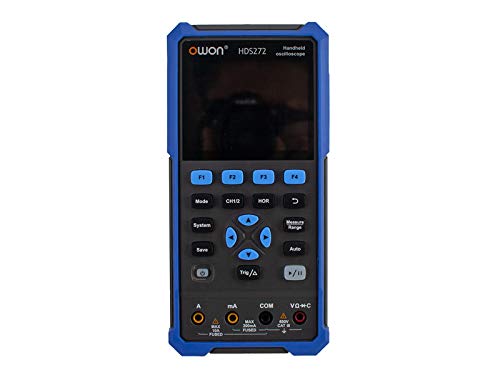
OWON® HDS272S 3.5" LCD 2CH Handheld Oscilloscope 70MHz Bandwidth 20000 Counts Multiumeter OSC + DMM+ Signal Generator 3 in 1 Suitable for Automobile Maintenance and Power Detection


As an Amazon Associate we earn from qualifying purchases. Product prices and availability are accurate as of the date/time indicated.
OWON makes a wide range of test equipment, and the HDS272S code points to the HDS handheld line. The name does not tell you more, so rely on the datasheet for details.
- Pro: handheld designs are easy to carry from the bench to the car, which is useful for checking sensors in place.
- Pro: a pocket-friendly format makes it practical for hobbyists who do not want a permanent bench setup.
- Con: model codes alone make it hard to compare, so confirm channel count and isolation on the listing.
Skip it if you need a documented automotive feature set with preset vehicle tests, or if you prefer a brand that sells specialized probes for cars. Beginners may want clearer guidance in the manual. Read the datasheet for bandwidth and sample rate, then compare both to the fastest signal you expect to see on the car.
OWON HDS242

OWON HDS242 oscilloscope 2 in 1 40MHz Professional Handheld PC oscilloscope, 20000 Counts Digital multimeter 3.5 inch LCD Display Universal Test Instrument (oscilloscope+multimeter)


As an Amazon Associate we earn from qualifying purchases. Product prices and availability are accurate as of the date/time indicated.
The HDS242 is another entry in the OWON handheld line. Its number is lower than the HDS272S, so it may represent an earlier or simpler variant of the same family.
- Pro: a basic handheld scope can be enough for slower sensors such as throttle position and coolant temperature signals.
- Pro: carrying a smaller instrument makes it easier to take readings at the connector while someone cycles the ignition.
- Con: lower model numbers often mean less capability, so confirm specs before relying on it for fast serial data.
Skip it if you plan to analyze fast communication buses, or if you want comprehensive memory and storage features. Technicians who work on many cars each week should look at more capable models. Plan to pair it with a good set of back-probes and a stable ground lead, which matter more than the screen when the fault is intermittent.
Hantek DSO2C10

Hantek DSO2C10 Digital Storage Oscilloscope 100MHz Bandwidth 2CH | 1GSa/s 8M Memory Depth with High Voltage Probre


As an Amazon Associate we earn from qualifying purchases. Product prices and availability are accurate as of the date/time indicated.
Hantek builds low-cost and mid-range scopes, and the DSO2C10 code points to its DSO2 series. The model code does not state features, so lean on the manufacturer listing.
- Pro: Hantek products are popular with hobbyists who want a capable scope without a professional price tag.
- Pro: a DSO format means you get a screen and controls in a single body, which keeps things simple on a fender.
- Con: it is not an automotive-branded instrument, so you will need to supply back-probe tips and a safe grounding plan.
Skip it if you want guided automotive tests or a documented library of vehicle waveforms, or if you prefer a rugged industrial case. New users may need to learn trigger settings. Read the manual before connecting to a vehicle, since trigger and probe-attenuation settings are the most common source of confusing waveforms.
Hantek DSO2D10

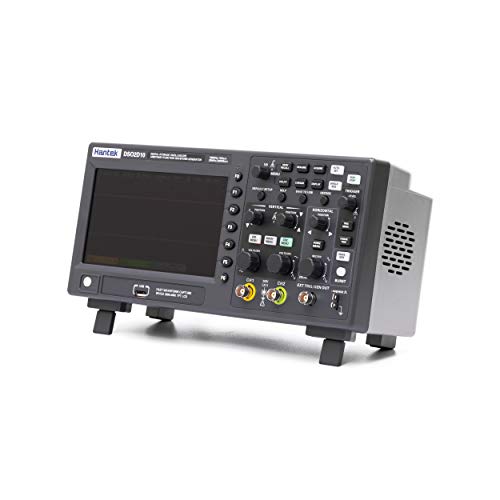
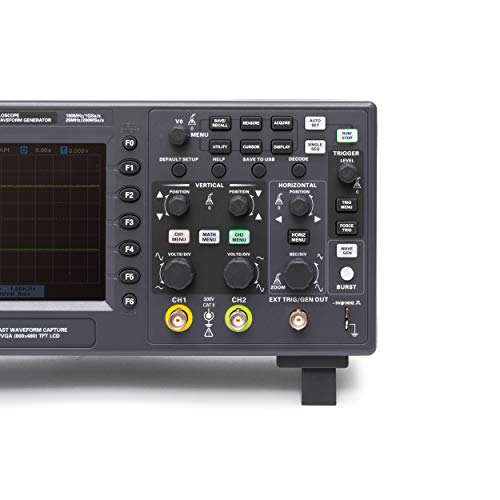
Hantek DSO2D10 Digital Storage Oscilloscope 100MHz Bandwidth 2CH 1GSa/s | 8M Memory Depth with 1CH Waveform Generator



As an Amazon Associate we earn from qualifying purchases. Product prices and availability are accurate as of the date/time indicated.
A sibling of the DSO2C10 in naming, the DSO2D10 uses a different suffix that normally denotes a variant with different features, so compare the two datasheets closely.
- Pro: stepping between sibling models lets you choose a feature mix that suits your work, such as extra functions you value.
- Pro: staying within one brand family eases the learning curve if you add a second Hantek tool later.
- Con: suffix differences are easy to miss, so verify that the model you order matches the one you read about.
Skip it if you need a clearly automotive instrument with documented tests, or if you want a more rugged field tool. Technicians who work outdoors may prefer a more robust case. Compare both datasheets side by side and note which features you actually need so the suffix does not become an expensive surprise.
Which One Fits
- Daily shop use with mixed electrical jobs: the two Fluke ScopeMeter models are built for that rhythm.
- Hobbyists on a budget: the OWON HDS272S and HDS242 offer pocket-friendly handheld formats.
- Tinkerers who like to compare specs: the Hantek DSO2C10 and DSO2D10 give two siblings to weigh.
- Technicians who also detail or wash cars: consider extending your garage gear with a detailing pressure washer.
Common Mistakes
- Clipping the scope ground to a signal wire instead of chassis ground, which can short a circuit.
- Buying on bandwidth alone and overlooking channel count, memory depth, and isolation.
- Using the wrong probe setting, so a 10:1 probe is read as 1:1 and the voltage scale is off by ten.
- Probing wiring by piercing insulation instead of using back-probe pins, which invites corrosion and future intermittent faults.
- Ignoring the safety category rating when working near ignition coils and hybrid components.
FAQ
Can a handheld scope replace an automotive scan tool?
No. A scan tool reads codes and data, while a scope shows actual voltage over time. Technicians often use both together, starting with codes and then confirming the suspect circuit with a waveform.
How many channels do I need for car work?
Two channels cover most diagnostics, and four help with comparing crank, cam, and injector signals at once. Handheld models are typically limited to two, so a quick sequence of captures can stand in for more channels.
Is 20 MHz enough?
For most sensors and actuators, yes. Serial buses may need more, so check the signal you want to see before settling.
What accessories matter most?
Back-probes, alligator clips, and a good ground lead matter most. If you also install a trailer or camper, the guide to RV covers can help you protect it between trips.
Do I need a scope for basic car care?
Not for most owners. Those who just want a clean car can start with car wash kits instead.